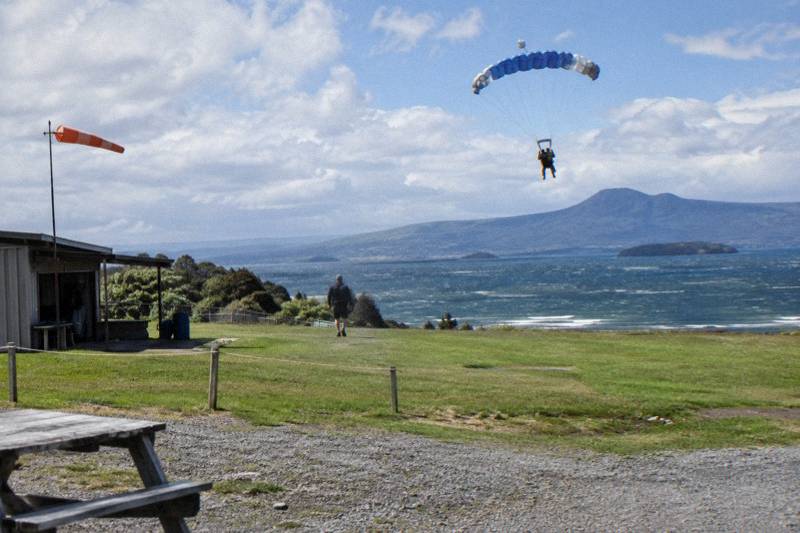
Tandem Skydive In Taupo: Instructor, Harness And Parachute Explained
A tandem skydive in Taupo pairs you with one tandem master and one parachute system built for two. Here is what the operator says about the people, the harness and the gear, and how the three bookable tours differ.
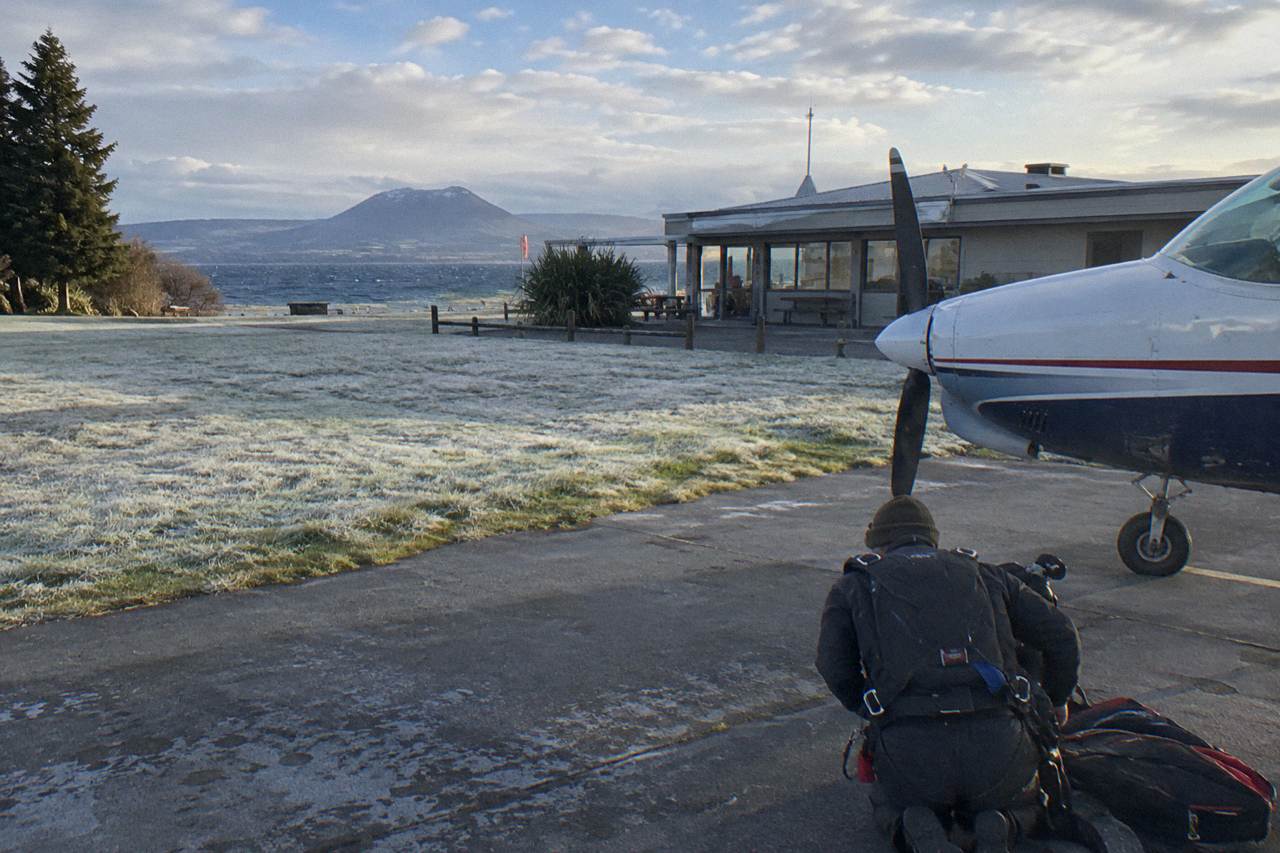
Short answer
The operator supplies the jumpsuit, goggles, hat and neck buff, and says its tandem masters are tested by the NZ Parachute Industry Association. You wear warm, comfortable clothes and closed-toe shoes underneath. Skydive-only prices run from NZD 279 at 9,000 ft to NZD 529 at 16,500 ft, and the 12,000ft Tandem Skydive tour is rated 5.0 across 457 reviews.
| Quick fact | Detail |
|---|---|
| Drop zone | 1227 Anzac Memorial Drive, Taupo Airport, about a 10 minute drive from town |
| Supplied gear | Jumpsuit, goggles, hat, neck buff |
| You bring | Warm comfortable clothes, closed-toe shoes |
| Tandem masters | Tested by the NZ Parachute Industry Association, the operator says |
| Bookable altitudes | 12,000 ft and 15,000 ft tours, plus the helicopter combo with a 15,000 ft jump |
| Operator-only heights | 9,000 ft (NZD 279) and 16,500 ft (NZD 529) |
| Free cancellation | 24 hours, on the 12,000ft tour |
What Does A Tandem Skydive In Taupo Actually Involve?
A tandem skydive is a single jump shared by two people: you, strapped into a harness that clips to a tandem master, and that tandem master, who wears and operates the one parachute system that carries you both down to the ground. You do not pull anything, steer anything or land anything yourself, and no training course sits between you and the aircraft door. The tandem master handles the exit, coaches your freefall body position, deploys the canopy and manages the landing. Your job on the climb is to listen to a short briefing, and your job in the door is to hold the position you were shown.
The arrangement exists so that a person with no experience can jump from altitude on the same day they arrive at the drop zone. Everything that requires skill, from the aircraft exit to the flare at touchdown, sits with one professional. The operator says its tandem masters are tested by the NZ Parachute Industry Association, and that it has been jumping for more than 25 years with over 200,000 jumpers. Both figures are the operator's own statements about itself, and they are the right things to read when you are weighing who you trust with the jump.
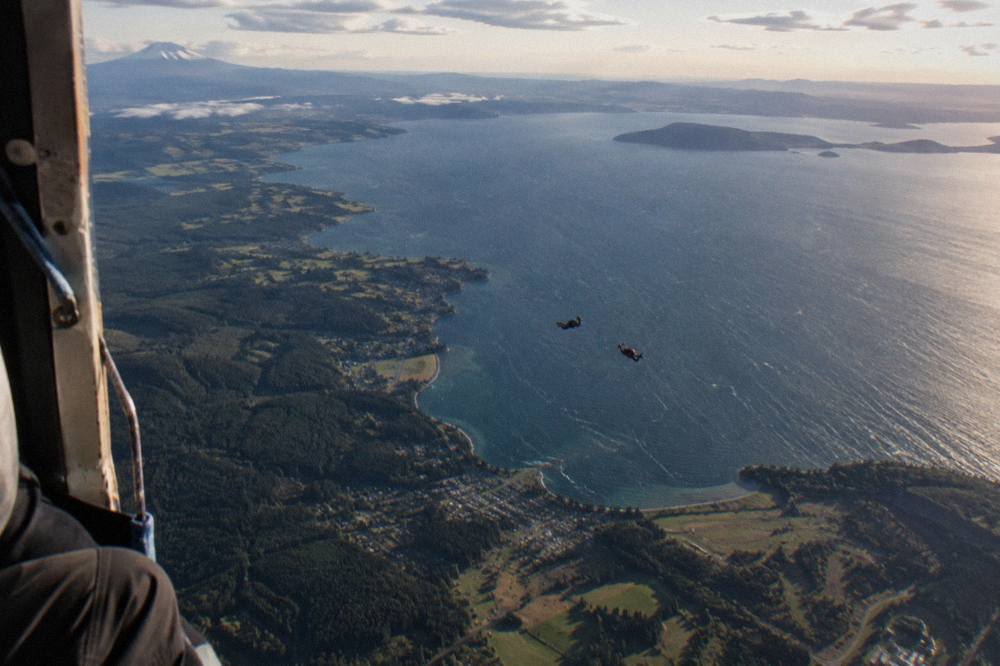
The skydive portion of the visit is about 30 minutes, and the operator's FAQ says you are finished in about 2 hours all told, with advice to allow 2 to 3 hours. Trips run hourly, 9:00 to 16:00 in winter and 8:00 to 18:00 in summer, and the operator says it jumps 362 days a year, weather permitting. You arrive 30 minutes before your booked time to sign in, which is also when the paperwork and gear fitting happen. None of that window is dead time; it is the part of the day where the equipment side of this page actually reaches you.
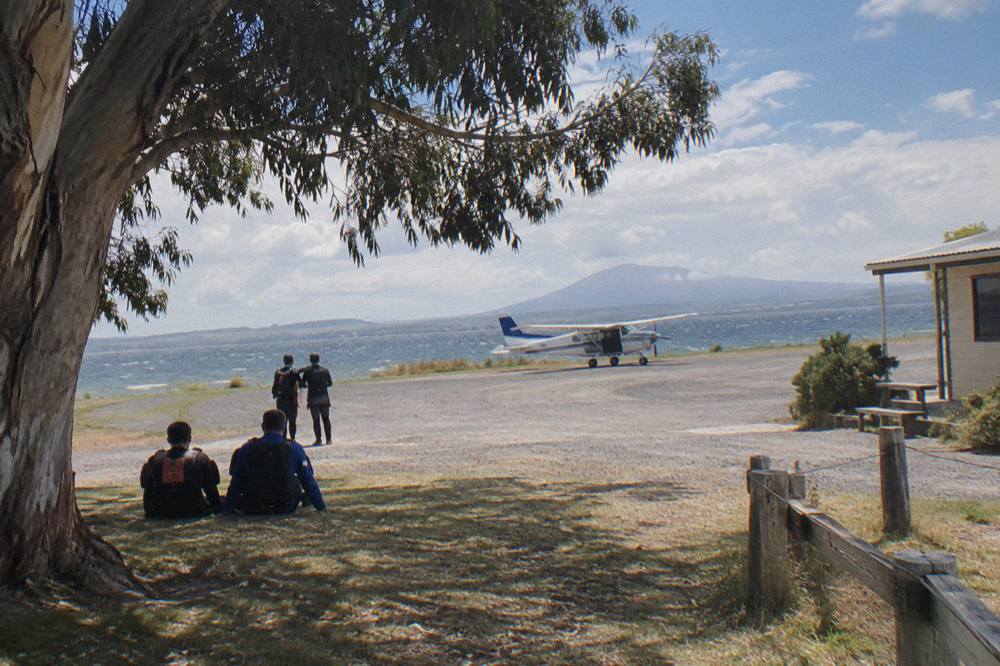
The practical shape of the day, from briefing to landing, is covered in more depth in the first time skydiving in Taupo guide. This page stays on the two things you are literally attached to: the person and the equipment. Both are worth understanding before you book, because the questions people ask at the drop zone, about who pulls the cord and what they get to wear, are answerable in advance.
Who Is The Tandem Master You Are Strapped To?
The person you are strapped to is a qualified jumper known as a tandem master, and their entire role is to fly the parachute for both of you on the jump, and the operator says each one is tested by the NZ Parachute Industry Association before carrying a single passenger. You are harnessed together at four connection points before boarding, chest to back, and you stay connected from the moment the aircraft door closes until you are standing on the ground again. The connection is made on the ground, checked by hand, and the tandem master briefs you on it before you fly. It is a physical, checkable link, not a symbolic one.
On safety standing, the operator's own words carry the weight here, and they should be read as the operator's claims. The operator says it is governed by the Civil Aviation Authority, which it says has certified its Safety Management System, and it describes itself as a Gold Qualmark drop zone. Those statements are self-descriptions, but they are specific, checkable ones, and the operator puts them on its own FAQ page. Read them as a starting point for your own questions rather than a substitute for asking them.
What you can reasonably expect from the person clipped in front of you follows from the structure of a tandem: they decide the exit timing, they monitor your body position in freefall, they deploy at the right height, and they manage the canopy down to a stand-up landing. If anything about your own situation, your mobility, your eyesight or a medical question, changes the picture, the operator asks you to see a doctor first and says it may decline a jump for safety. The phone line, 0800 826 336, is the direct route to an answer before you travel.
Three tours share this same drop zone and the same tandem masters. The 12,000ft Tandem Skydive, from US$194 and rated 5.0 across 457 reviews, is the entry tour; the 15,000ft Tandem Skydive gives you a longer freefall at almost 60 seconds; and the Helicopter Flight, 15,000ft Skydive swaps the fixed wing climb for a 12-minute helicopter flight. How each one changes the day is compared below.
What Equipment Is Supplied On The Day?
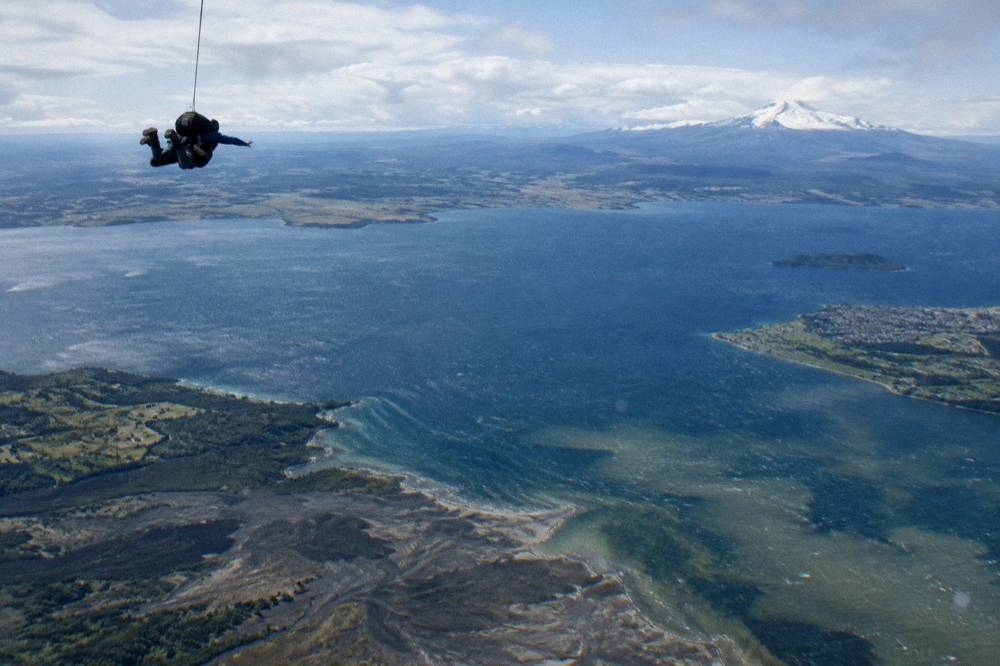
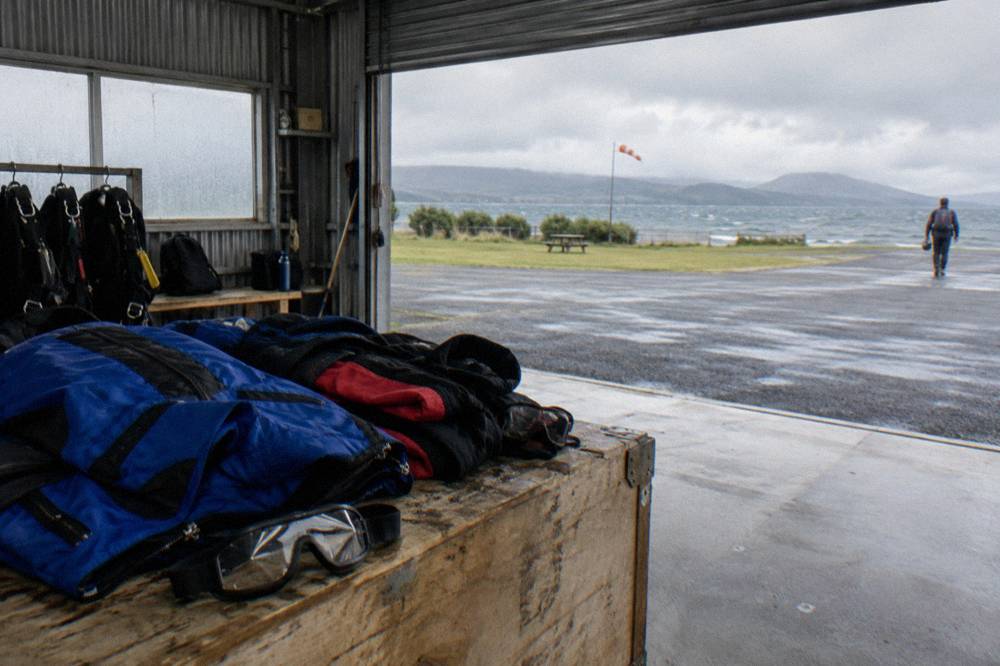
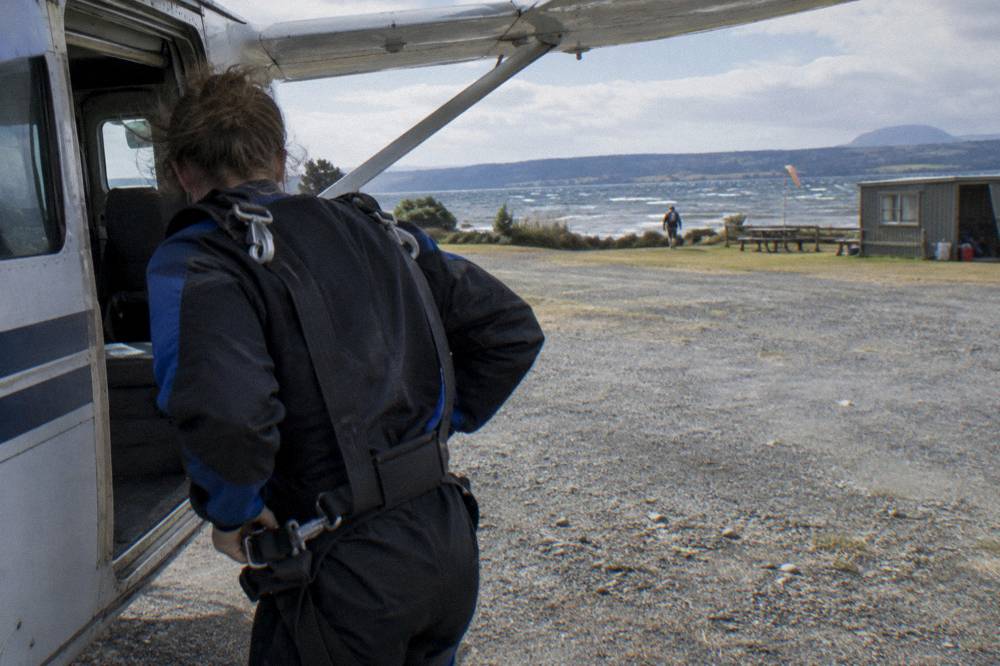
On the day, the operator supplies everything that matters on the outside: the jumpsuit, the goggles, the hat, and the neck buff. That means the only clothing decisions left to you are the layers you wear underneath, which should be warm and comfortable, plus a pair of closed-toe shoes that will stay securely on your feet. The jumpsuit goes over your own clothes and takes the wind and the wear of the exit. The goggles go over your eyes, and the operator says glasses fit underneath them, so you do not need to jump blurry if you wear specs. The hat and buff cover the parts the jumpsuit does not.
Nothing in the operator's guidance mentions specialist gear you must buy, which surprises people who expect a shopping list. There is no stated ruling on shorts or skirts; the operator simply says warm, comfortable clothes, and anything beyond that is not stated, so ask the operator on 0800 826 336 if you are unsure. The same practical reading applies to footwear: closed-toe shoes are the stated requirement, and anything with laces you can tighten is the sensible reading of it. Winter mornings at an airport drop zone are colder than the lakefront in town, which is why the warm-layers advice earns its place.
Every jump includes a certificate of completion and a free neck buff, and the operator offers 50% off a T-shirt on the 15,000 ft and higher camera packages. That is the full list of what comes free with the jump itself. Cameras are a separate decision, and the operator's photo and video page sets out the packages in full.
If the gear itself is what has you hovering over the booking button, the 15,000ft Tandem Skydive runs the same equipment list with almost 60 seconds of freefall, and the booking page has the current availability.
The featured tour for this page, though, is the 12,000ft Tandem Skydive, and it is the one with the full printed figures: 2 hours, free cancellation within 24 hours, from US$194, and a 5.0 rating across 457 reviews. If the harness-and-parachute picture above has settled your nerves, that tour is the natural first booking.
How Does The Harness And Parachute System Work?
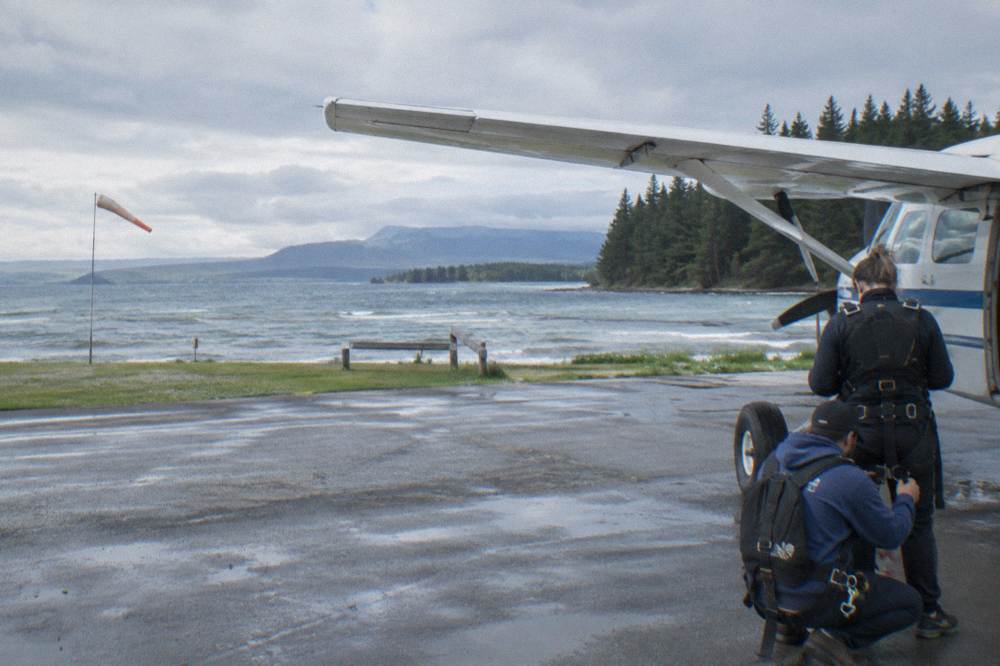
You wear your own harness, the tandem master wears theirs, and the two of you clip together at four points before boarding, which makes you one connected pair from takeoff through landing. You then descend under a single parachute that is sized and packed specifically for two people, so the whole system is built around that four-point connection between you. The main canopy sits on the tandem master's back together with a reserve, and the tandem master handles both. Nothing in the system asks you to operate anything at any point in the jump, which is the entire point of the tandem format and the reason no prior training is needed.
In general terms, the sequence runs: connected on the ground, briefed, into the aircraft, exit together in a stable position, freefall, deployment by the tandem master, then a canopy ride and a lift of the legs for landing. The operator gives no canopy, deployment or equipment specifications, and none are printed here; if you want detail on a specific system, ask the operator directly rather than trusting a page that invents it. A page that quotes canopy sizes or deployment heights the operator never published is guessing, and you deserve better than a guess on this question. The rest of the planning pages sit on Taupo Tandem Skydive.
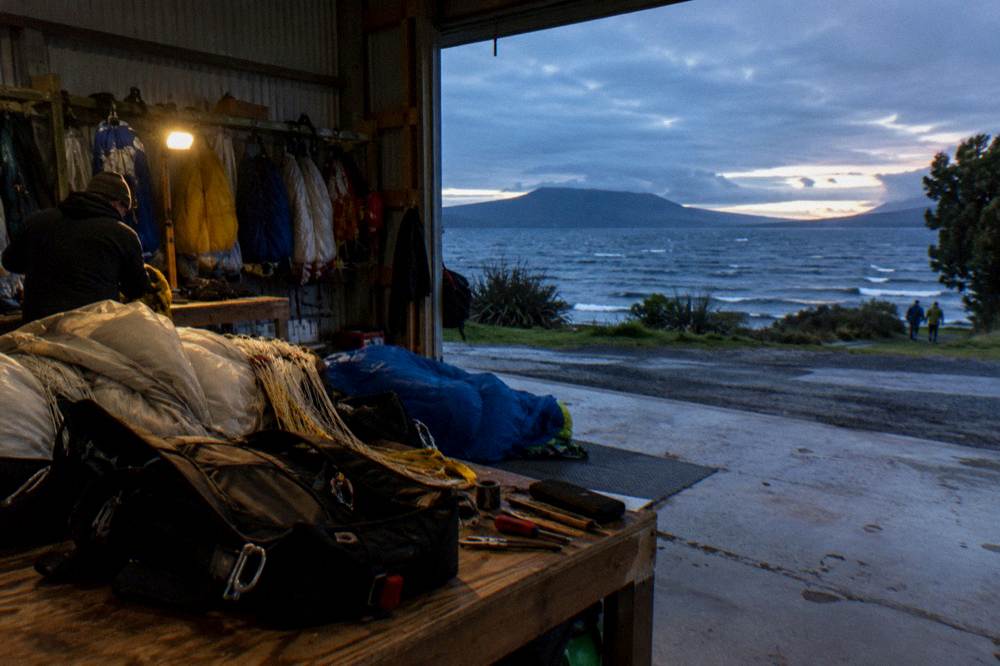
Your harness is fitted to you and tightened by the tandem master, and it is checked again before the door opens. That fitting is one reason arrival is set 30 minutes before your booked time: sign-in, paperwork and gear fitting all happen in that window. The operator's terms and conditions cover the operational rules of the day, including the weather and rebooking terms, in more detail than a summary can.
One question worth asking at the drop zone rather than online: whether anything about your body shape, mobility or weight changes the fitting. The operator says anyone up to and over 100 kg is assessed individually by the Safety Officer, with no fixed maximum stated for the skydive-only tours, and the Taupo skydive weight limit guide handles that topic fully. Government photo ID is required on the day too, so it belongs in the same pocket as your questions.
Which Altitude Does Each Tour Jump From?
The operator's height ladder runs 9,000 ft, 12,000 ft, 15,000 ft and 16,500 ft, and the two bookable skydive-only tours take the middle rungs: the 12,000ft Tandem Skydive at almost 40 seconds of freefall, and the 15,000ft Tandem Skydive at almost 60 seconds, both under the same tandem masters with the same supplied gear. The 9,000 ft and 16,500 ft options exist on the operator's own price ladder but have no separate tour booking of their own; they are booked through the operator directly.
| Height | Skydive price (NZD, per person) | Freefall, operator-stated | How it is booked |
|---|---|---|---|
| 9,000 ft | NZD 279 | Not stated | Operator only |
| 12,000 ft | NZD 329 | Almost 40 seconds | 12,000ft Tandem Skydive tour, from US$194 |
| 15,000 ft | NZD 379 | Almost 60 seconds (up to 60) | 15,000ft Tandem Skydive tour |
| 15,000 ft (combo) | NZ$599 per person, minimum 2 | Up to 60 seconds | Helicopter Flight, 15,000ft Skydive |
| 16,500 ft | NZD 529 | Over 70 seconds | Operator only, ages 14+ |
The gear does not change between the tour heights; the height does. The 15,000ft Tandem Skydive uses the same tandem master, the same harness arrangement and the same supplied jumpsuit and goggles as the 12,000ft tour, which is why the choice between them is a freefall-length question rather than an equipment one. The 12,000 vs 15,000 ft comparison walks that trade-off in detail, including what the extra 20 seconds of freefall is worth to a first timer.
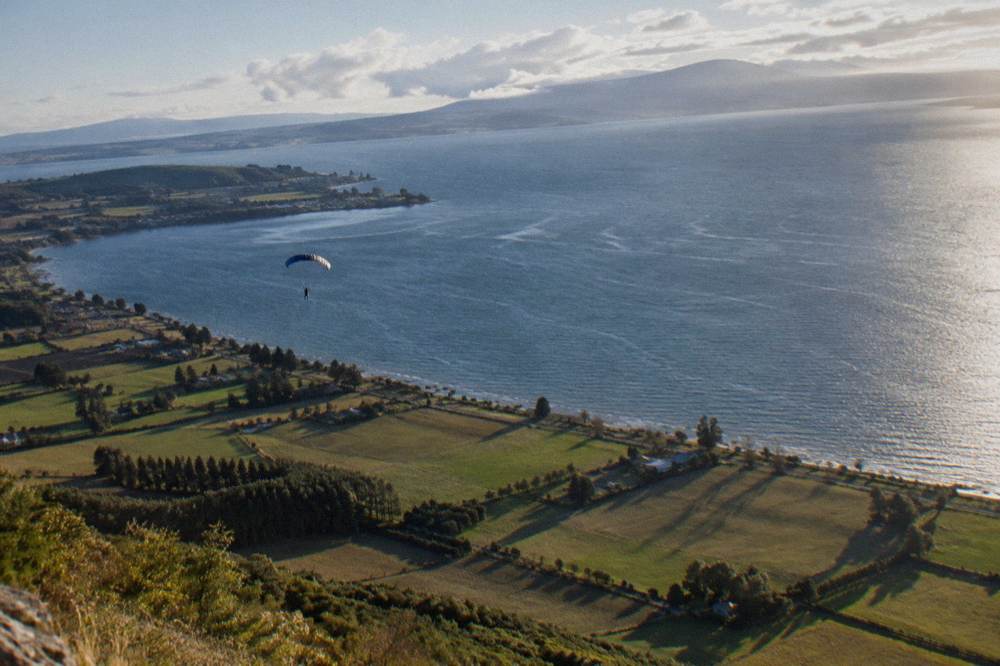
The 16,500 ft option carries conditions of its own: the operator says it is for ages 14 and over, needs a high-altitude waiver signed at the drop zone, and the exit height may be adjusted slightly. The operator also calls it the highest jump, at nearly 18,000 ft above sea level, though that altitude-above-sea-level framing is the operator's claim, not the exit height. Anyone eyeing that rung should raise it with the operator by phone before assuming it is simply a taller version of the bookable tours.
Read as a price ladder, the four rungs show what each step up actually buys. Moving from the 12,000 ft tour to the 15,000 ft tour adds NZD 50 per person for roughly 20 seconds more freefall, taking the stated figure from almost 40 seconds to almost 60, which works out to about NZD 2.50 for each additional second. The step above that is steeper and thinner: 16,500 ft costs NZD 150 more than the 15,000 ft rung and NZD 200 more than the 12,000 ft tour, for a freefall gain the operator frames only as over 70 seconds against up to 60.
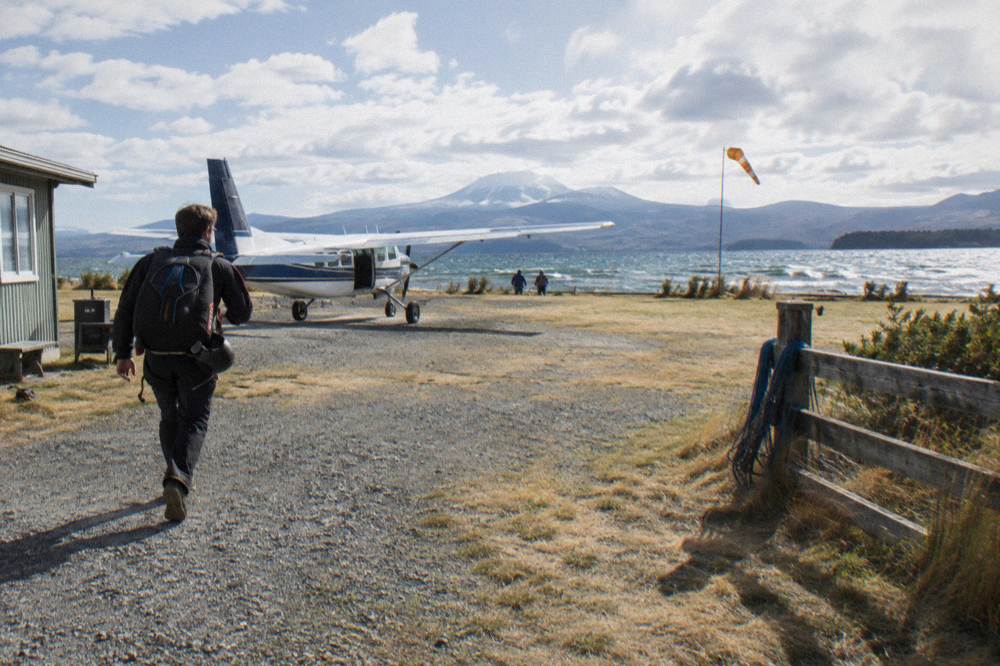
The 9,000 ft rung is NZD 50 cheaper than the 12,000 ft tour and the only height on the ladder with no operator-stated freefall figure, so anyone weighing it against the bookable tours needs to ask the operator how long the drop actually lasts before comparing value. The combo sits apart from the single-jump ladder in two ways: it requires a minimum of two people, which rules out a solo traveller booking it alone, and at NZD 599 per person it stands NZD 220 above the 15,000 ft skydive on its own, a gap that corresponds to the Helicopter Flight half of the package. One practical wrinkle on comparing prices: the bookable tour side is quoted in US dollars, with the 12,000 ft tour from US$194, while the operator's own ladder is entirely in NZD, so a like-for-like comparison has to happen at the time of booking.
Two small print points round the table out. The ages 14 and over condition attaches to the 16,500 ft rung alone; no age condition is stated for the other three heights, so families with younger teenagers should confirm the position on 9,000, 12,000 and 15,000 ft rather than assume the rule runs across the board. And the freefall figures are hedged in the operator's own wording, almost 40, almost 60, up to 60 and over 70, with the 15,000 ft height carrying two phrasings across its tour and combo rows, so anyone anchored to a round 60 seconds should treat it as the upper end rather than a promise.
What About The Helicopter Combo's Setup?
The Helicopter Flight, 15,000ft Skydive uses the same tandem system and the same supplied gear as the skydive-only tours, but the climb to altitude is a 12-minute helicopter flight, and the booking page says photos and videos are included with the jump. The operator separately offers a free exit photo on the combo. It is a different start point, too: the helicopter leaves from the Huka Falls Heliport area, with the booking page giving 415 Huka Falls Road, Wairakei, rather than the Taupo Airport drop zone where the skydive-only tours check in.
The helicopter leg is flown by a separate helicopter company, and the operator says transport back to the helicopter base or your accommodation is included. The combo runs from NZ$599 per person with a minimum of two passengers per booking, on a 1pm helicopter, 2pm skydive schedule. The booking page says it is not suitable over 136 kg (300 lb), a limit that belongs to the combo alone; the skydive-only tours carry no stated maximum. Free cancellation within 24 hours and a reserve-now, pay-later option are both stated for the combo on its booking page.
Photos and video on the combo are, per the booking page, included, which is a real difference from the skydive-only tours where camera packages are paid NZD add-ons. On those tours, the Ace package pairs the jump with selfie HD photos from the tandem master's wrist cameras, and the Guru adds a freefall camera flyer. How that all prices out is covered in the Taupo skydive photo and video guide.
The combo is new and carries no rating yet, so there is nothing to compare it against on reviews. If you are weighing it against a straight 15,000 ft jump, the choice is flight-versus-fixed-wing and included-versus-paid media, not equipment quality; the parachute on your back is the same setup either way. For pairs travelling together, the two-passenger minimum is less of a constraint than it sounds, and it is the sort of tour a celebration pair books together.
Common Mistakes When Choosing Your Taupo Skydive And Gear Package
The most common slips are assuming camera footage is included on the skydive-only tours, showing up in shoes that cannot stay on your feet, and expecting a stated maximum weight that does not actually exist for the jump you booked. None of these are dangerous errors, and none of them will stop a jump on their own, but each one costs money or comfort on a day you have been looking forward to for months. A short checklist covers all three, plus two quieter traps beside them.
| Mistake | What actually happens | How to avoid it |
|---|---|---|
| Assuming photos are included | On the skydive-only tours, cameras are paid NZD add-ons; only the combo says photos and videos are included | Decide your camera package before the day, 10% off booked online |
| Wearing loose or open shoes | Closed-toe shoes are the stated requirement; everything else is guidance | Lace-up shoes, warm comfortable layers |
| Expecting a printed weight maximum | No fixed maximum is stated; up to and over 100 kg is assessed individually by the Safety Officer | Call 0800 826 336 if over 100 kg |
| Applying the combo's 136 kg limit everywhere | The 136 kg (300 lb) limit belongs to the helicopter combo's booking page only | Check the tour you actually booked |
| Forgetting ID and the 24 hour scuba rule | Government photo ID is required; no scuba diving within 24 hours, and no drugs or alcohol | Bring ID, plan the dive calendar around the jump |
A quieter trap: treating the 15,000ft Tandem Skydive tour page as if it should show a rating and price in the same shape as its 12,000ft sibling. It carries none of those figures, and the honest comparison is altitude and freefall seconds, not scores. The reviews that do exist, 457 of them at 5.0, all sit on the 12,000ft Tandem Skydive tour, and a 5.0 across that many reviews is a rating with real standing rather than a rounding artefact of a handful of entries.
Weather planning is the last piece. Payment is taken after the jump, a weather hold means rebook the same day or later or cancel free if you cannot return, and you call 30 minutes before arrival or pickup to confirm conditions. The Taupo skydive weather and cancellations guide gives that machinery in full, including what happens to prepaid amounts when the sky makes the call.
Common Questions About Tandem Skydive Instructors And Equipment
Who Is The Tandem Master On A Taupo Skydive?
A qualified jumper who flies the parachute for both of you. The operator says its tandem masters are tested by the NZ Parachute Industry Association. You are clipped together at four points and stay connected from the aircraft to the ground.
What Equipment Does The Operator Supply?
A jumpsuit, goggles, a hat and a neck buff with every jump. Glasses fit under the goggles. You wear warm, comfortable clothes and closed-toe shoes underneath.
Do I Need To Buy Any Special Gear?
No. Nothing in the operator's guidance asks you to buy specialist equipment. There is no stated ruling on shorts or skirts; if in doubt, ask the operator on 0800 826 336.
Is The Parachute System Mine To Operate?
No. The tandem master wears and operates the main canopy and the reserve, handles deployment and controls the landing. Your job is the body position you are briefed on.
Does The Equipment Change Between 12,000 Ft And 15,000 Ft?
No. The same tandem masters, harness arrangement and supplied gear cover both heights. The difference is freefall: almost 40 seconds at 12,000 ft versus almost 60 seconds at 15,000 ft, as the operator states.
Are Photos And Video Included?
On the Helicopter Flight, 15,000ft Skydive the booking page says photos and videos are included, and the operator offers a free exit photo. On the skydive-only tours, camera packages are paid NZD add-ons.