What Does Skydiving Actually Feel Like?
A plain, honest walkthrough of what a tandem skydive over Lake Taupo actually feels like, second by second, from the plane ride to the landing.
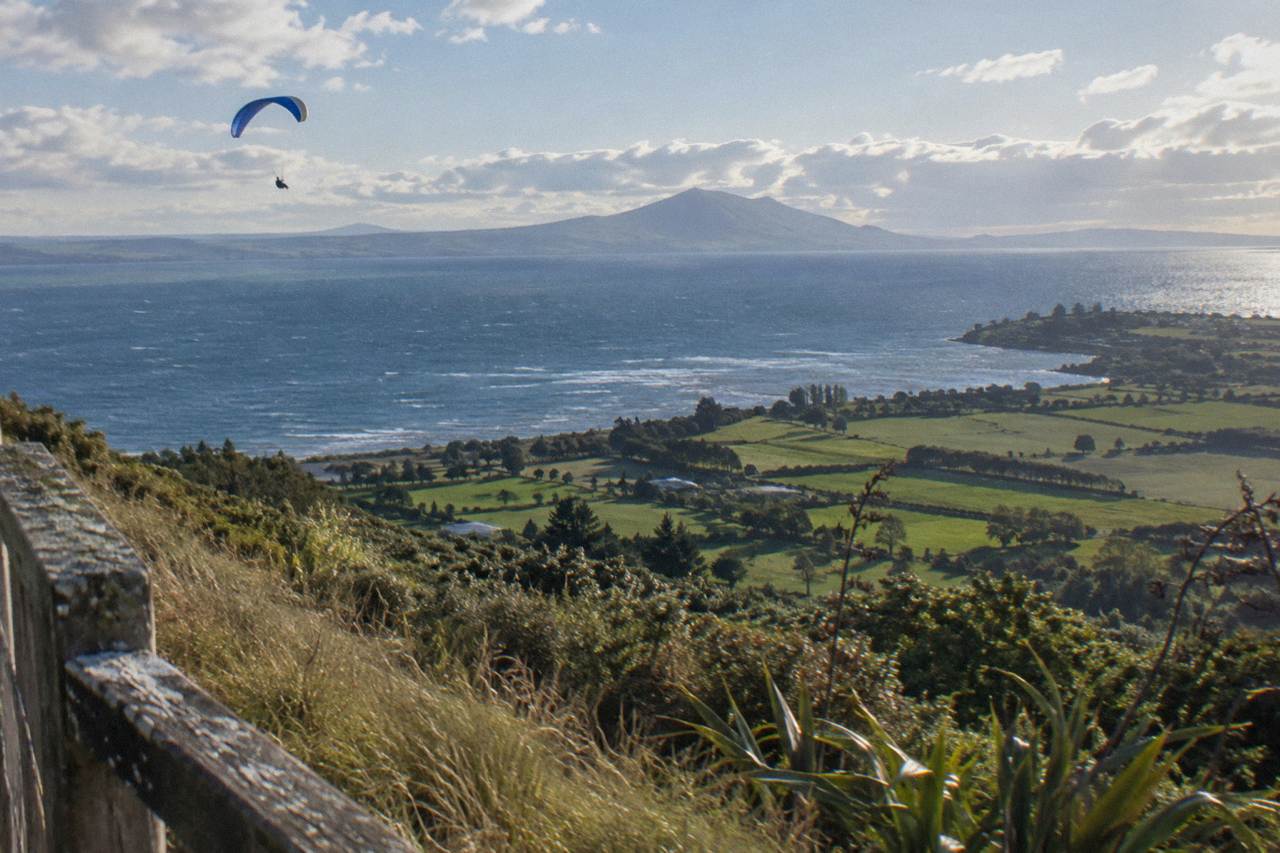
Almost everyone who books a tandem jump does so with a picture in their head that is wrong in one specific way. The picture is a rollercoaster drop: the lurch, the stomach in the throat, the scream. Jumpers who have actually done it describe something different, and they describe it with surprising agreement. Freefall feels like being held up by moving air, the parachute ride feels calm enough to hold a conversation, and the whole thing, in Taupo at least, unfolds over a lake and volcanic landscape that steals attention away from the fear.
This article walks through the jump in order, what the plane ride feels like, what the exit actually does to the body, what almost 40 or almost 60 seconds of freefall is like, and what happens under canopy. It uses only what jumpers commonly report in hedged, general terms, plus the operator's own stated figures for freefall durations and camera options, because no two bodies experience the same jump the same way.
In general terms, jumpers commonly report that freefall feels like pressing your body into a strong, rushing wind rather than dropping, with no rollercoaster stomach lurch, because the aircraft carries you to speed with the plane rather than starting from a standstill. The sensation is usually described as loud, physical and strangely stable, more like floating on compressed air than falling. After the parachute opens, the noise stops and the descent turns quiet and slow enough to look around. The three experiences, the climb, the freefall and the canopy ride, feel so different from each other that most people say the jump contains three separate feelings, not one.
That is the short answer. The longer one is worth reading, because knowing what each phase actually feels like changes what you book, how high you jump and whether you pay for a camera. A 12,000ft Tandem Skydive gives you almost 40 seconds of freefall, operator-stated. The 15,000ft Tandem Skydive stretches that to almost 60 seconds, up to 60 per the operator. Those extra seconds are the single biggest reason people pay for more altitude, and they change the character of the freefall, because the first ten seconds feel different from the ones that follow.
What The Plane Ride Feels Like
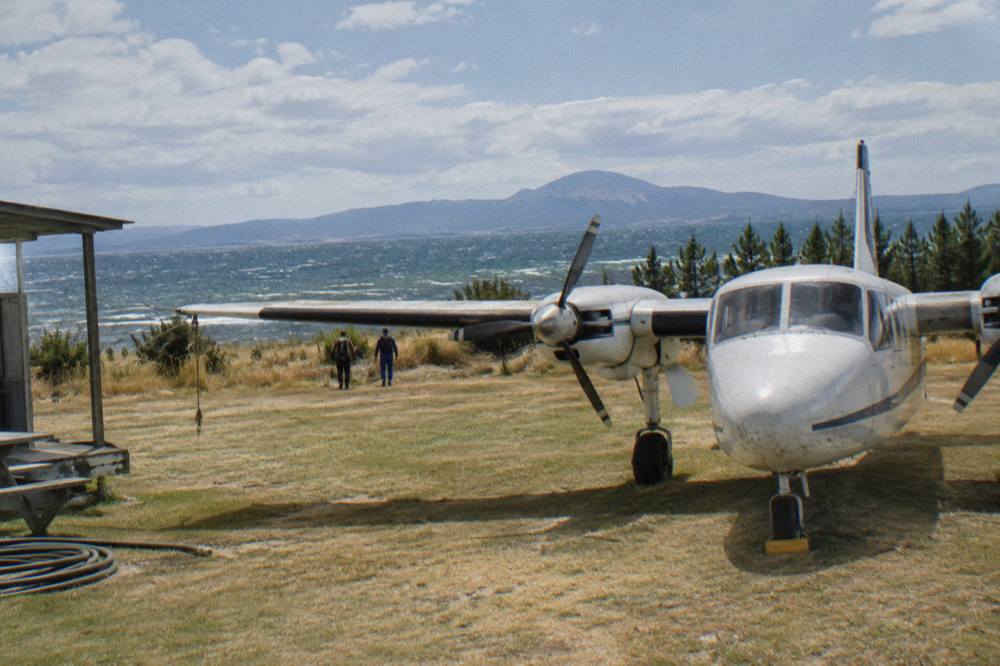
The ride up is usually the calmest part of the entire experience, and this is where most of the nerves live, not in the door. Expect a steady climb to altitude rather than chaos, with the anticipation building during the ascent itself instead of at the moment you finally move toward the open doorway. Jumpers commonly describe a normal small-plane flight: engine noise, a seatbelt, a view out the window, and nothing detectable happening to the body as the aircraft climbs. In Taupo the view side is a big part of it, with Lake Taupo and the surrounding volcanic country spreading out below. There is no special feeling as the aircraft climbs, nothing changes at 9,000 or 15,000 ft that you can sense, and the altitude itself announces itself only through the window.
Several things happen on the way up that shape the experience. The tandem master who has been clipped to the harness checks it, and the checks are visible, which many jumpers say is reassuring rather than alarming. Goggles go on, and glasses fit under the supplied goggles, so the view stays sharp for anyone who wears them. The noise level rises as the door or window opens near altitude, and that rush of real wind is the moment most people identify afterwards as the point it stopped feeling hypothetical.
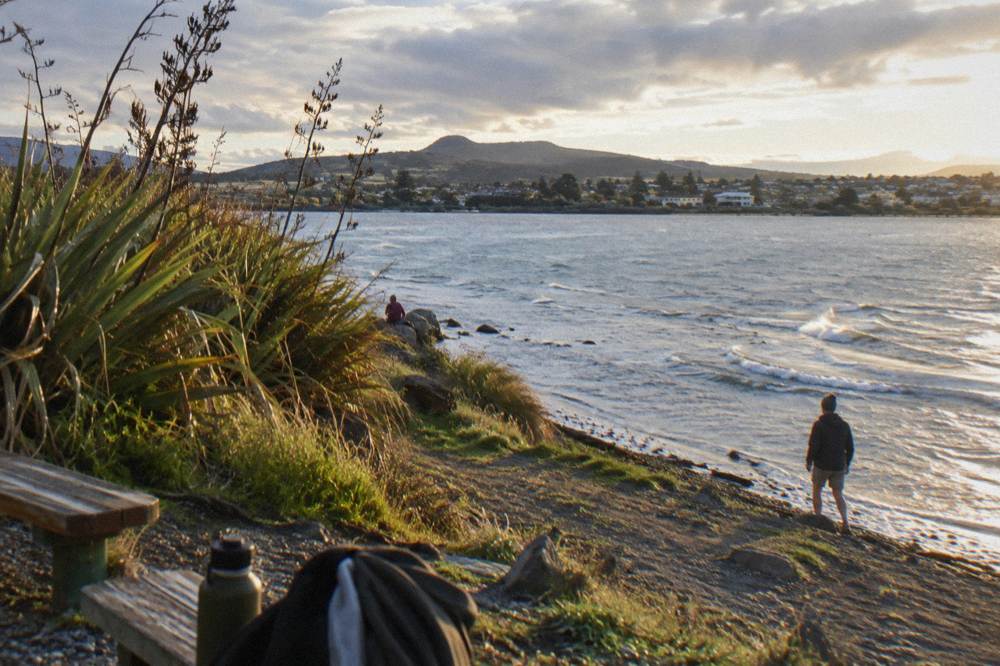
It helps to know the practical shape of the day here. The operator states that the skydive portion takes about 30 minutes and that you finish in about 2 hours, with trips running hourly from 9:00 to 16:00 in winter and 8:00 to 18:00 in summer, 362 days a year. Arrive 30 minutes before the booked time to sign in. None of that is sensation, but it sets expectations: the intense part is bracketed by ordinary logistics, sign-in, briefing, a short flight, and a landing back on the drop zone at 1227 Anzac Memorial Drive, Taupo Airport, about a 10 minute drive from town.
If you are the kind of person whose nerves are worse in the waiting than in the doing, the operator's FAQ page covers the day-of sequence in more detail, including what to wear (warm, comfortable clothes and closed-toe shoes, with jumpsuit, goggles, hat and neck buff supplied).
The Exit: What Those First Seconds Feel Like
The exit is the one moment jumpers describe as genuinely overwhelming, a half-second of pure sensory overload that arrives all at once. It also passes faster than expected, so the most intense part of the jump is over almost as soon as it begins. The common report is not terror but a kind of white-noise shock: wind, noise, the horizon swinging, and then, within a few seconds, the feeling of the air holding you. Many people say the build-up to the exit was the worst part and the exit itself was over before they finished being scared of it. Nobody can promise how your body will react, but the pattern repeats across enough first-hand accounts to treat it as the usual shape of the thing.
The reason there is usually no stomach drop is physics, and it is worth understanding because it removes the single biggest fear. A rollercoaster lurches you from zero to speed in an instant. On a skydive you leave an aircraft already moving forward at flying speed, so your body barely changes what it is doing; it trades forward motion for the wind. Jumpers commonly report that the falling sensation fades within seconds and is replaced by what many describe as pressure, a firm, rushing cushion of air you can lean on.
Nobody can promise how your body will react, and the operator promises nothing either: weather decides whether a jump runs, and the operator may decline a jump for safety reasons. What can be said is general and hedged: first-time tandem jumpers very often describe the exit as the part they were most afraid of and the part they remember least clearly. The freefall that follows is what sticks.
The exit is also the one moment of the jump you cannot re-experience later, which is exactly why the camera options are built around it. The Legend package includes an exit photo, and the free exit photo on the Helicopter Flight, 15,000ft Skydive combo is the operator's own answer to the same instinct. People want proof of the moment they cannot quite remember.
What Freefall Actually Feels Like, Second By Second
Freefall is commonly described as the best part of the jump: loud, physical, and wind-buffeted, it keeps you powerfully present from the moment you leave the plane, with no sense of falling after the first seconds, and its total duration depends directly on your exit height. The operator states almost 40 seconds of freefall at 12,000 ft and almost 60 seconds, up to 60, at 15,000 ft. At 16,500 ft, its highest jump, the operator says freefall lasts over 70 seconds. Those numbers matter, because freefall is not a blur that swallows time; it is long enough to notice things, and longer altitude gives you noticeably more of it.
The texture of it, in the words jumpers tend to reach for, is wind and pressure. The skin of your cheeks flutters. Your arms, if the tandem master lets you hold them out, feel like they are resting on moving water. It is loud enough that speech is impossible and thinking narrows to the moment. What it does not feel like, in most reports, is the plummet of imagination: there is no rushing-toward-the-ground vertigo, partly because at exit height the ground reads as a map rather than a floor.
The middle seconds are where the difference between altitudes shows. At almost 40 seconds you get the shock of the exit and then, roughly, the settled freefall before the canopy work begins. At almost 60 seconds there is a genuine stretch where the novelty stabilises and people describe looking around, finding the lake, registering the volcano shapes. That extra third again of freefall is the whole argument for the higher jump, and it is why the 15,000ft Tandem Skydive exists as its own booking.
Freefall duration, operator-stated, by exit height:
| Exit height | Freefall, operator-stated | Notes |
|---|---|---|
| 9,000 ft | Not stated | The operator's own page gives conflicting seconds; print none |
| 12,000 ft | Almost 40 seconds | The height of the 12,000ft Tandem Skydive |
| 15,000 ft | Almost 60 seconds, up to 60 | Also the jump in the helicopter combo |
| 16,500 ft | Over 70 seconds | Ages 14+, high-altitude waiver signed at the drop zone |
One honest gap to state once: the operator gives no freefall speed in km/h or mph, so no number appears here. The 16,500 ft option is also special in another way, the operator says it is its highest jump, "nearly 18,000 ft above sea level" as the operator's own claim, and an outside freefall camera is not offered at 9,000 or 16,500 ft, though a handycam package is.
The 15,000ft Tandem Skydive is the booking that turns almost 60 seconds into the centrepiece of the day. Its rating, review count, price and duration are not stated on the booking page; ask the operator on 0800 826 336 for anything not covered there.
Why The Camera Choice Changes The Experience
The camera choice changes what freefall feels like afterwards because the jump itself is over in under a minute, and the footage is what you keep. The camera you pick shapes how you relive those moments once you are back on the ground, so the decision ends up defining much of the overall experience. The operator offers two capture systems: the Selfie cam, tandem-master wrist cameras, or the Freefall cam, a separate camera flyer who exits with you and films the freefall from outside. Cameras run from NZD 25 up to NZD 300, with 10% off a camera package booked online, and media arrives by email as a link. The feeling fades in days; the footage is what convinces people it happened at all.
There is a real experiential difference between the two systems, and it is worth understanding before booking. The Selfie cam captures your face and the horizon behind you from the harness. The Freefall cam puts a person in the air beside you, which means your footage shows your whole body against the sky. Jumpers commonly report that seeing themselves in third person makes the memory more real later, though nobody can promise how any individual will feel reviewing it.
| Package | Operator description | Includes |
|---|---|---|
| Ace | Selfie HD photos | Jump plus wrist-camera photos |
| Pro | Selfie HD video and photos | Jump plus wrist-camera video and photos |
| Guru | Freefall HD video and photos | Jump plus camera-flyer video and photos |
| Legend | Freefall plus selfie video and photos, plus exit photo | The fullest package |
Package totals include the jump itself; the full NZD price ladder for heights and packages sits with the operator's photo and video page. The general rule of thumb people arrive at: if you will want to show people the jump, book a camera, because memory alone will keep the feeling but lose the details.
Under The Parachute: The Quiet Half
The canopy ride is the quiet half of the skydive, and it is the part almost nobody anticipates correctly: once the parachute is open, the noise drops away into sudden quiet, the descent turns gentle, and you have time enough to talk, look around, and breathe. Jumpers commonly describe the opening as a firm tug that slows everything from noise and pressure to stillness in a couple of seconds. From there the parachute descends slowly enough that the ground approaches in a way the brain can process, and many people say this stretch, not the freefall, is when they finally relaxed enough to enjoy the view. It is the reflective half of the jump, and the part people most often say they did not expect to love.
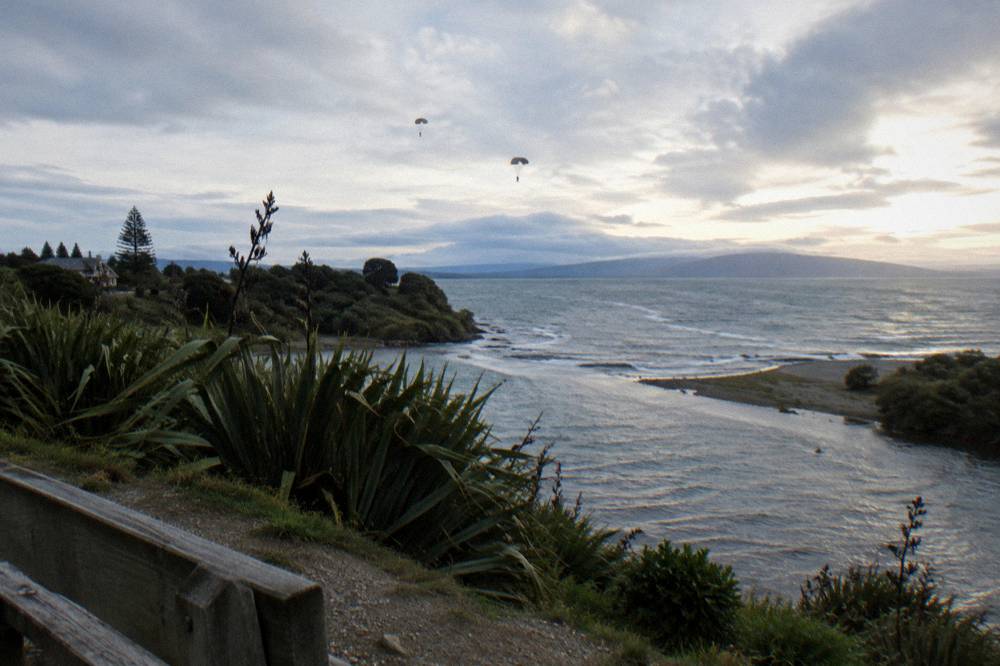
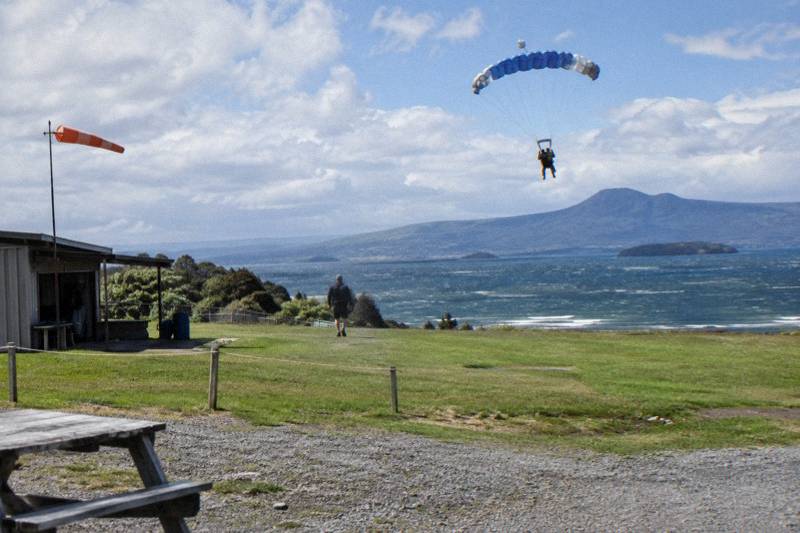
The contrast is the point. Freefall is all sensation and no reflection; the canopy ride is where reflection happens. Tandem masters often steer the canopy and point out features, and conversation is possible. In Taupo the operator's drop zone sits by the airport at Wharewaka, with Lake Taupo in view, which makes this phase scenic in a way that drops over flat farmland are not. The landing, in general reports, is typically soft, with legs up and a slide or stand-up touchdown.
The whole arc, exit to landing, is why people describe a skydive as containing several experiences in one morning. The operator's own framing of the day: about 30 minutes for the skydive portion, finished in about 2 hours. The feeling afterwards is commonly described as a mix of relief, elation and disbelief, in hedged general terms; the site's piece on why the weird feeling after a jump can linger covers that phase in detail.
How Height And Booking Change The Feeling
The height you pick changes the feeling mainly by extending freefall rather than adding intensity, because the exit and the first few seconds feel much the same whether you jump from 12,000 ft or 15,000 ft; what grows is the length of the freefall itself, so a higher jump gives you more time in the air rather than a sharper rush. The operator offers four heights, 9,000, 12,000, 15,000 and 16,500 ft, with NZD prices of 279, 329, 379 and 529 respectively for skydive-only jumps. The 12,000ft Tandem Skydive is the bookable tour with the track record, rated 5.0 across 457 reviews, from US$194, running about 2 hours with free cancellation up to 24 hours before. What the extra altitude buys is seconds, and seconds are the currency of the whole experience.
The two other bookable options change the feeling differently. The 15,000ft Tandem Skydive buys the longer freefall described above. The Helicopter Flight, 15,000ft Skydive combo changes the door itself: a 12-minute helicopter flight from the Huka Falls area replaces part of the climb, and the booking page says photos and videos are included, with the operator adding a free exit photo. It runs from NZ$599 per person with a minimum of two passengers, starts at 415 Huka Falls Road, Wairakei, and the booking page says it is not suitable over 136 kg (300 lb). The skydive-only tours carry no stated maximum weight; the operator says jumpers up to and over 100 kg are assessed individually by the Safety Officer.
Every jump includes a certificate of completion and a free neck buff, and the operator's prices page carries the full NZD ladder if you are weighing the heights against each other.
What Trips People Up When Reading The Feel Into The Booking
The common mistakes are expecting the stomach drop, underestimating the exit, and overestimating the freefall's terror, so people brace for the wrong sensations at the wrong moments. Skipping the camera to save money is a separate trap, and a choice many regret, because memory flattens that minute and leaves no record of what actually happened. People also book the lowest height expecting the same freefall as the top of the ladder, which the operator's own seconds show is not the case, and assume weather will cooperate on a tight itinerary, which nobody can promise. Each of these mistakes is avoidable with one honest read of what the jump actually contains, which is what the sections above laid out.
A few specific traps deserve naming. Expecting the rollercoaster lurch sets you up to misread the real sensation, which is pressure, not plummeting. Treating the 12,000ft and 15,000ft tours as interchangeable ignores that almost 40 seconds and almost 60 seconds are materially different experiences. Assuming a camera is a nice-to-extra misses that the operator's own package design, with the exit photo at the top of the range, treats the exit moment as the thing people most want captured. And forgetting the phone call, 30 minutes before arrival, to confirm weather, leaves you discovering a hold at the drop zone instead of in town.
Weather holds are not a failure of planning; they are normal. The operator's terms spell out the rebooking logic, and the guide to Taupo skydive weather and cancellations works through it. For the rest of the planning side, the Taupo Tandem Skydive homepage is the hub for heights, prices and camera packages.
Common Questions About What Skydiving Feels Like
What Does Skydiving Actually Feel Like?
In general reports, it feels like being pressed into a strong, rushing wind rather than falling, with no stomach lurch after the first seconds, followed by a quiet, slow parachute descent. The exit is brief sensory overload; the freefall is loud and physical; the canopy ride is calm.
Does Your Stomach Drop When You Skydive?
Usually not, because you exit an aircraft already moving at flying speed, so the body barely changes speed in an instant. Jumpers commonly report a brief falling sensation at the exit that fades within seconds into wind pressure. The general physiology is covered in the piece on why the stomach does not drop.
How Long Does Freefall Feel Like It Lasts?
The operator states almost 40 seconds at 12,000 ft and almost 60 seconds, up to 60, at 15,000 ft. Most jumpers say it felt shorter than it was, and that the settled middle portion, not the exit, is what they remember.
Is The Plane Ride Scary?
Commonly reported as the calmest part and the nerviest. It is an ordinary small-aircraft flight with a view over Lake Taupo; nothing detectable happens to the body as the aircraft climbs to jump height.
Does The Parachute Opening Hurt?
The general report is a firm, quick tug as the canopy deploys and the wind noise stops, not pain. After the opening the descent is slow enough to talk and look around before a typically soft landing.
Is It Worth Adding A Camera?
The jump is over in under a minute of freefall and the footage is what lasts. Cameras run from NZD 25 up to NZD 300 as add-ons, or as packages that include the jump, with 10% off a camera package booked online. No one can promise how you will feel watching it, but it is the only way to keep the exit, the moment people remember least clearly.