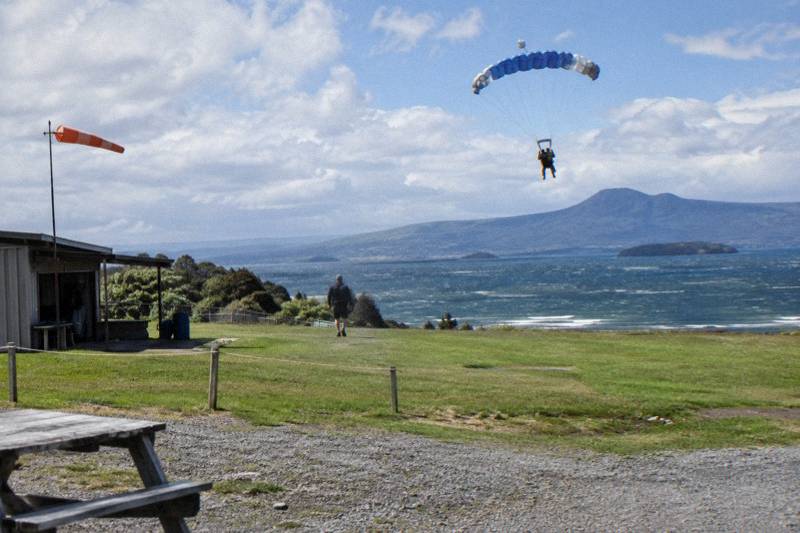
Is Bungee Jumping Scarier Than Skydiving?
An honest comparison of which one feels scarier, bungee jumping or a tandem skydive, with the fear types each one suits and what the Taupo skydive options actually involve.
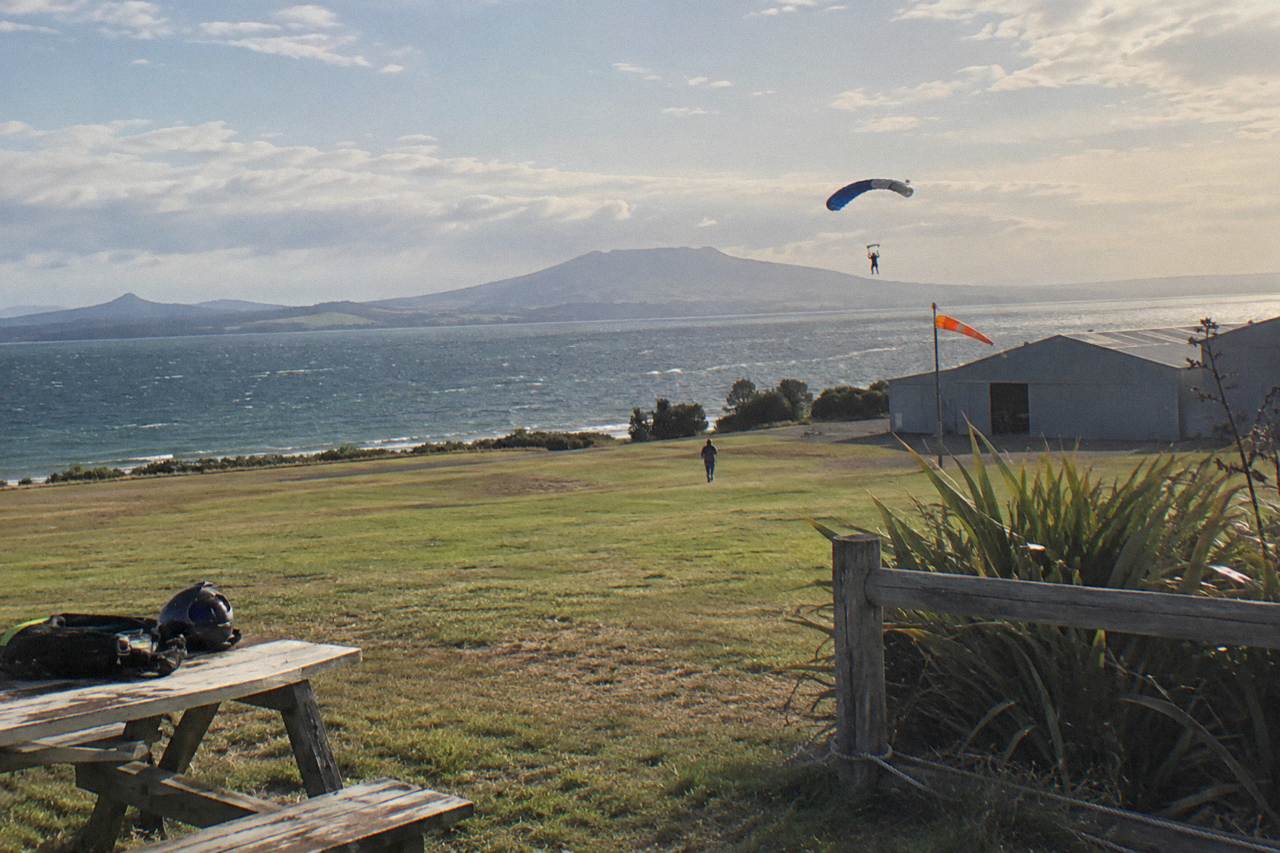
The difference comes down to control: on a bungee you make yourself jump, while on a tandem skydive the tandem master handles the exit, the freefall and the parachute. On a bungee you stand on the edge, look down, and jump yourself. On a tandem skydive the jump is shared with a tandem master who runs the exit, the freefall and the parachute, so your only real job is to show up and arch. Neither answer is universal, and this page works through the comparison fear by fear using what the Taupo operator actually states, plus the local bungy product by name only.
For most first-timers, yes, bungee jumping feels scarier than skydiving, and it comes down to one specific reason: on a bungee jump, nobody and nothing makes you leave the platform. You have to make yourself jump, standing at the edge and choosing to step into the air, and that single act of self-driven commitment is what most people find far more frightening. The whole event compresses into a single decision made while looking at the ground or water below. A tandem skydive spreads the fear across a longer sequence, briefing, the ride to altitude, the door opening, and the exit happens fast enough that there is no long moment to talk yourself out of it. People who dread the deliberate leap tend to find the bungee harder. People who dread height itself, and the idea of a long fall, tend to find the skydive harder to think about and easier to do.
The comparison also depends on what each activity actually gives you. A tandem skydive comes with a trained tandem master attached, gear you did not pack yourself but did watch being checked, and a parachute descent that the operator describes as the calmer second half of the jump. A bungee gives you a cord, a harness and a countdown. There is no instructor sharing your decision at the edge. That structural difference, one shared jump versus one solo leap, is the honest core of the whole "which is scarier" debate.
Neither sport lets you compare fear on paper alone, and no operator can promise how a given person will feel. What can be compared is the structure of each experience, and that is what the rest of this page does. If you are weighing the two in Taupo specifically, the skydive side of the comparison is well documented: the operator publishes its altitudes, freefall seconds and prices, and the tandem tours covered here each give you a different version of the jump. The bungy side, the Taupo Bungy Water Touch product, is covered by name only here because its height and price are not part of the verified facts on this site, and the deeper side-by-side lives in the Taupo bungy versus skydive comparison.
If a tandem jump over Lake Taupo is the option you are leaning toward, these are the three formats worth comparing side by side.
What Actually Happens On Each Jump
A bungee jump is one short, self-driven leap with an immediate rebound; a tandem skydive is a longer sequence, roughly 30 minutes for the skydive portion and about 2 hours start to finish, in which a tandem master controls the exit, the freefall and the canopy. The operator states the freefall lasts almost 40 seconds from 12,000 ft, up to almost 60 seconds from 15,000 ft, and over 70 seconds from its highest option at 16,500 ft. Those stated seconds matter, because the fear profile of a skydive is dominated by the freefall, and its length is the one variable you can choose.
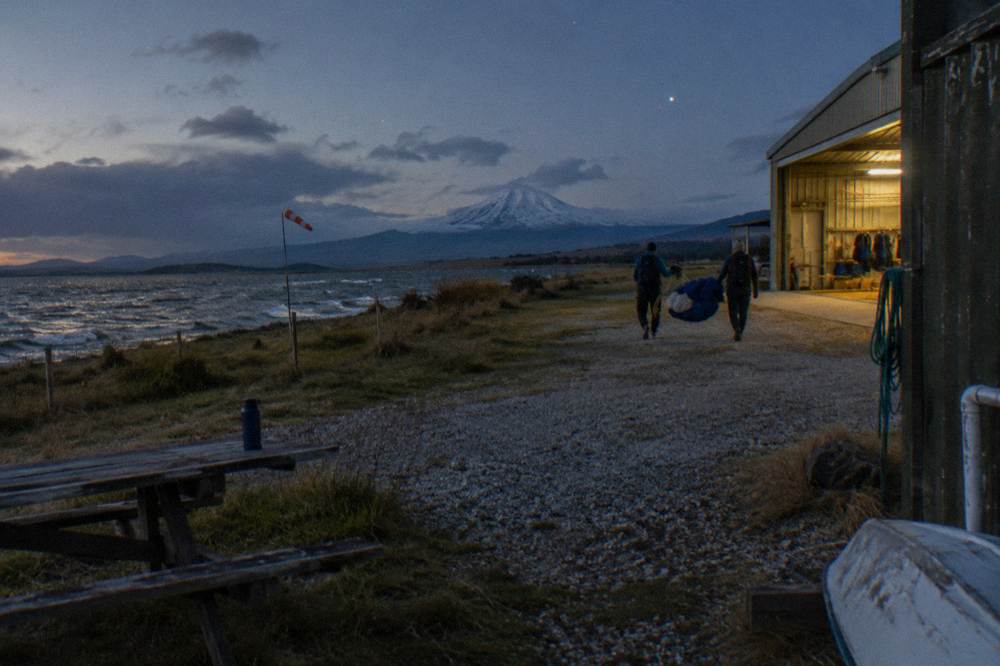
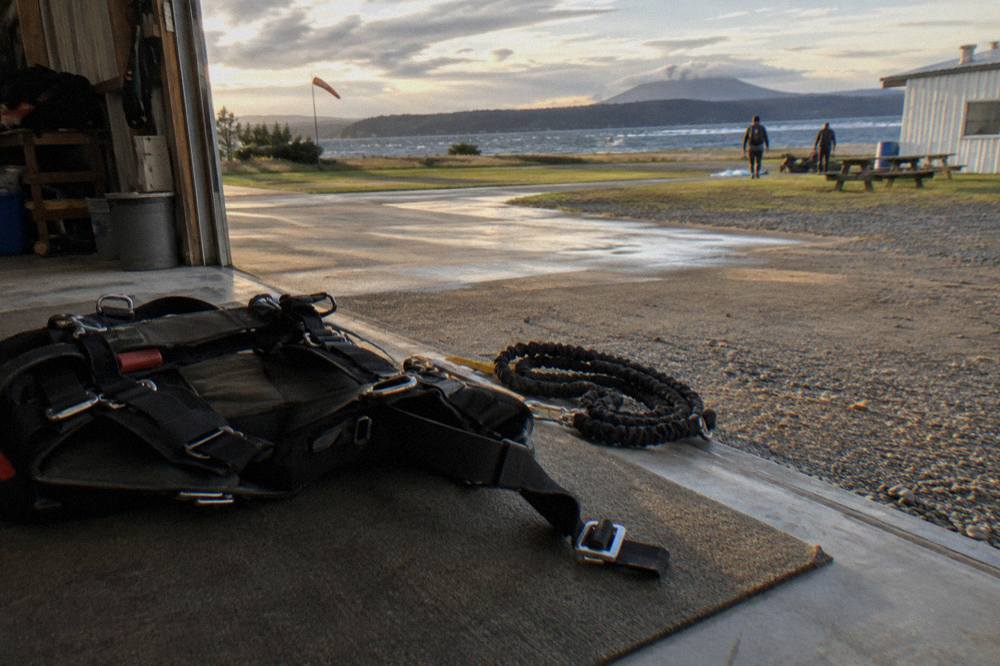
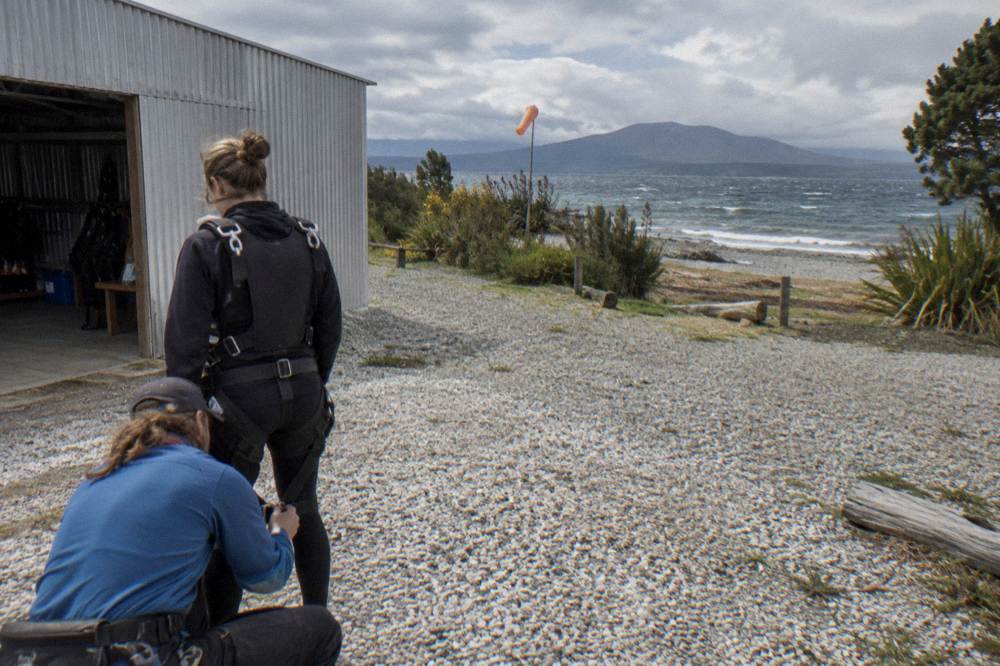
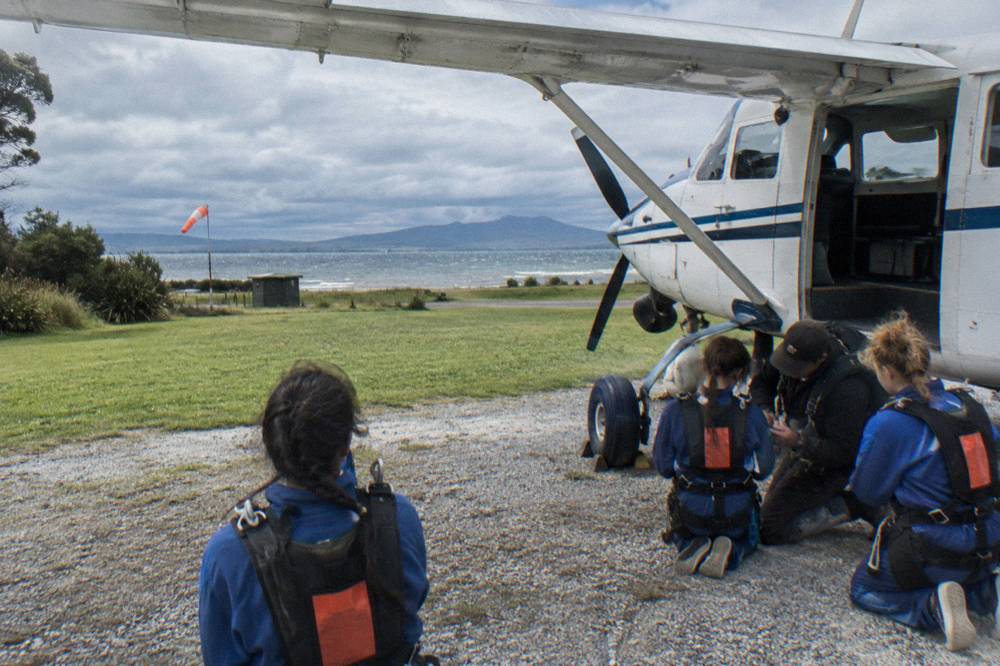
Walk through the skydive sequence and the fear moments become obvious. You sign in 30 minutes before your booked time, get geared up in a supplied jumpsuit, goggles, hat and neck buff, and meet the tandem master who runs the jump. The aircraft climbs to your chosen altitude over the lake. Then the door, the exit, the freefall, and the canopy ride down. Every one of those stages is shared: the tandem master handles the equipment, the exit position and the parachute, which is why so many nervous first-timers manage a skydive they doubted they could do. The operator's own FAQ page walks through this sequence and the check-in timing in detail.
The bungee sequence is shorter and lonelier. You are weighed, harnessed, attached to a cord, and walked to an edge. Then somebody counts down and you jump. There is no gradual build of altitude, no aircraft noise drowning your thoughts, no instructor physically attached. The fear is concentrated and immediate, and for many people that concentration is exactly the appeal. The rebound after the drop is its own sensation, distinct from anything in a skydive.
What you cannot do is compare the two on safety statistics or fear rankings, and no honest page should try. What you can do is compare what each one asks of you, and that is a fairer basis for a decision than any ranking.
Which Fear Type Suits Which Jump?
If your fear is the deliberate, self-made leap, choose the skydive; if your fear is sustained height and a long fall, the bungee's short exposure can feel more manageable, though many height-fearful people end up preferring the skydive precisely because the exit happens fast. That is the decision logic in one line, and the table below breaks it into the fear types people actually name when they ask this question. Nothing here promises how you will feel, it maps each stated feature of the jump onto each fear so you can place yourself.
| Fear you carry | Why bungee feels harder | Why skydive feels harder | Better fit, generally |
|---|---|---|---|
| The standing leap, making yourself jump | You jump alone, on a countdown | The exit is fast and led by the tandem master | Skydive |
| Sustained height, looking down | Lower altitude, seconds of exposure | 9,000 to 16,500 ft of climb before the door opens | Bungy, often |
| The long fall | Cord catches within seconds | Freefall lasts 40 to over 70 seconds depending on height | Bungy, often |
| Loss of control | You are the jumper | Tandem master runs exit, freefall and canopy | Skydive |
| Equipment worry | One cord and harness | Full tandem rig, checked and flown by the tandem master | Skydive |
| Regret after committing | The jump is over in seconds | You have the climb to adjust, and the canopy ride to enjoy it | Varies |
Notice the pattern: the skydive wins on paper for almost every control-related fear, because sharing the jump with a tandem master removes most of the decisions. The bungee wins for people whose fear is duration, less time scared, less altitude, less falling. If you already know a tandem jump is the right side of that trade for you, the next question is which altitude, and the freefall seconds are the honest way to size it. The 15,000ft Tandem Skydive stretches the stated freefall to almost 60 seconds, a meaningfully longer version of the part most people are scared of, and it is worth weighing that against the shorter 12,000 ft option before booking.
There is also a fear consideration that rarely makes the list: the aircraft. Some people who are fine with the jump itself are uneasy in small planes. If that is you, say so when booking and ask the operator what to expect on the climb. Others find the helicopter version of the day more appealing on exactly this point, and that is the third option in this comparison.
How The Taupo Options Compare On The Numbers
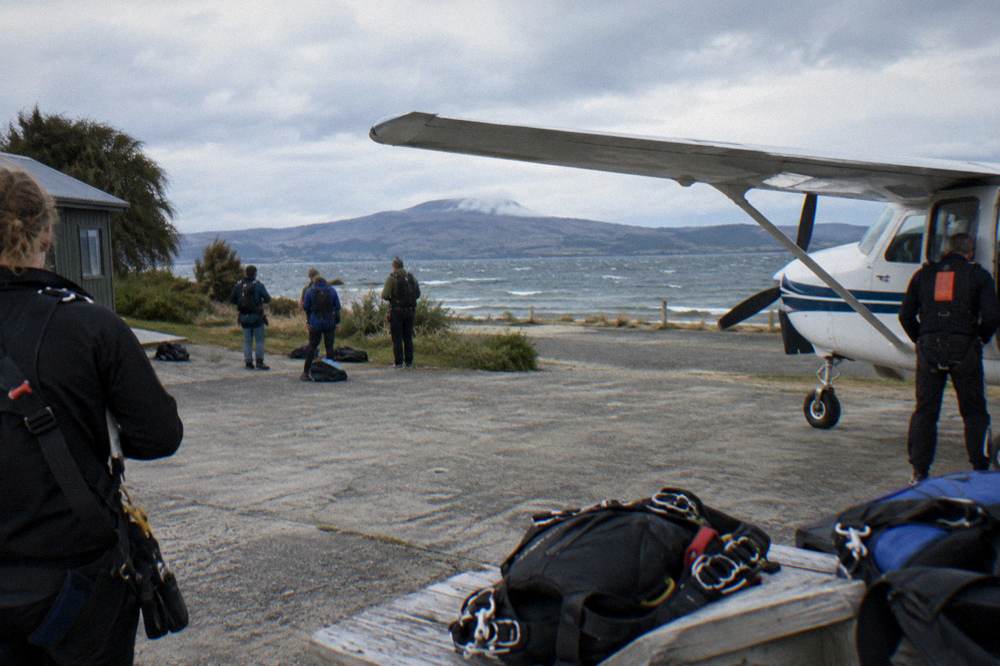
The Taupo operator offers four skydive heights, 9,000, 12,000, 15,000 and 16,500 ft, with freefall running from an unstated figure at 9,000 ft up to over 70 seconds at 16,500 ft, and skydive-only prices from NZD 279 to NZD 529 per person. The operator's prices page carries the full NZD ladder and the camera package totals. The three bookable tandem tours covered here sit at 12,000 ft, 15,000 ft, and a 15,000 ft jump reached after a 12-minute helicopter flight. The table shows what is stated for each height, which is the practical way to size the jump against your nerve and your budget.
| Height | Freefall, operator-stated | Skydive-only price (NZD) | Notes |
|---|---|---|---|
| 9,000 ft | Not stated | NZD 279 | Operator-direct option; no separate tour page |
| 12,000 ft | Almost 40 seconds | NZD 329 | The 12,000ft Tandem Skydive tour shows from US$194 |
| 15,000 ft | Almost 60 seconds, up to 60 | NZD 379 | The 15,000ft Tandem Skydive tour; its page shows no rating, price or duration |
| 16,500 ft | Over 70 seconds | NZD 529 | Ages 14+, high-altitude waiver signed at the drop zone |
The fear-relevant reading of that table is simple: you are choosing how long the part you are scared of lasts. Someone worried about the freefall itself can take the shorter version and still get the full tandem experience, the certificate of completion and the free neck buff the operator includes with every jump. Someone who suspects the fear will dissolve at the door can buy the longest freefall on offer.
The third option changes the shape of the day rather than the length of the fall. The Helicopter Flight, 15,000ft Skydive starts from the Huka Falls Road area with a 12-minute helicopter flight, then the 15,000 ft jump with freefall up to 60 seconds. The operator prices it from NZ$599 per person with a minimum of two passengers, and the booking page says photos and videos are included, with a free exit photo from the operator. If the small-aircraft climb is the part you dread, this format swaps it for a scenic flight, which is why it earns a place in a fear-based comparison at all.
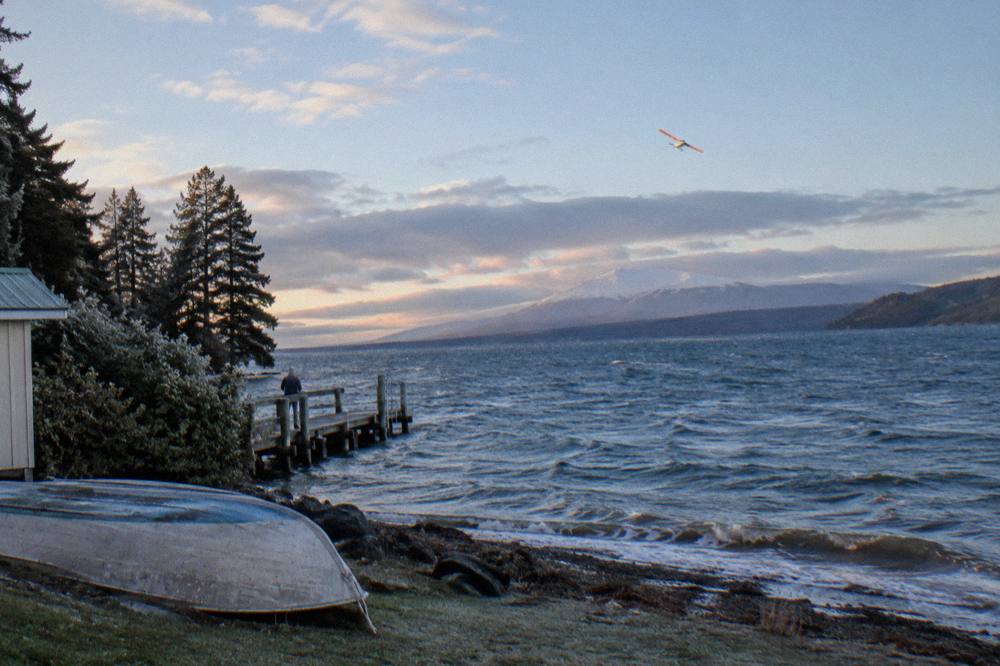
One more honest note on the comparison with bungy: the Taupo Bungy Water Touch product has no rating and no price in the verified facts for this site, so this page cannot rank it against the skydive on anything but the structure of the experience. What can be said is that the skydive side is unusually well documented, with a 5.0 rating across 457 reviews on the 12,000ft Tandem Skydive tour, free cancellation up to 24 hours before, and a 2 hour duration printed on its booking page. If you want a deeper look at what previous jumpers report, the Taupo skydive reviews guide covers it in full.
Should You Try Both On The Same Trip?
Yes, if your budget and schedule allow. Taupo happens to make the double unusually practical. The skydive drop zone sits at Taupo Airport, about a 10 minute drive from town per the operator, with free transport within Taupo picking up about 30 minutes before your booked time, and the operator runs trips hourly, from 9:00 to 16:00 in winter and 8:00 to 18:00 in summer, 362 days a year.
If you are planning the double, a few practical points from the operator's stated terms help. Arrive 30 minutes before your booked time to sign in, and call 30 minutes before arrival or pickup to confirm the weather. Payment is taken after the jump, and a weather hold means you rebook the same day or a later one, or cancel free if you cannot come back. There is a 15 percent surcharge on the skydive on New Zealand public holidays, and a 1.5 percent credit-card surcharge. None of this is fear-related, but a smooth day leaves less room for nerves to build.
For readers still on the fence about the skydive itself, the what a skydive actually feels like piece covers the sensations moment by moment, and it pairs well with the honest rundown of the downsides of skydiving before you commit. Fear research is normal; most tandem jumpers do some version of it.
What Trips People Up When Choosing Between Bungy And Skydiving
The single most common mistake people make is choosing between the two based on altitude alone, treating whichever activity happens higher up as automatically the scarier one, when the real driver of fear is the moment of commitment, not the number on the altimeter. The second is assuming the skydive needs physical courage or training, when a tandem jump asks neither: the tandem master handles everything technical, and the operator assesses eligibility on age and weight rather than fitness. The third is booking the bungy as a "warm-up" without realising that, for many people, the self-driven leap is the harder of the two fears and works better as the second act.
A few specific traps worth naming. People book the 15,000 ft or 16,500 ft option to "get their money's worth" when their real worry is the freefall itself, and the shorter jump would have served them better; the freefall seconds are stated, so size them honestly against your nerve. People assume the combo's weight limit applies to all skydives: the 136 kg (300 lb) limit belongs to the helicopter combo's booking page only, while the skydive-only tours have no stated maximum, just an individual assessment over 100 kg by the Safety Officer, and you should call the operator on 0800 826 336 about that. And people mix up the medical rules: no scuba diving within 24 hours of a jump, and no drugs or alcohol, are two separate rules, not one window.
One last trap is timing. Choosing the cheapest or tallest option without checking the day's schedule is how people end up rushing. Allow the operator's stated 2 to 3 hours, arrive 30 minutes early, and build the bungy around it rather than the reverse. The full first-timer walkthrough is in the first time skydiving in Taupo guide, which covers the day from sign-in to landing.
Whatever you decide, Taupo Tandem Skydive covers the skydive side of this comparison in depth, from prices and altitudes to weather and what to wear. These are the three tandem formats worth a final look.
Common Questions About Bungy Versus Skydiving
Is Bungee Jumping Scarier Than Skydiving?
The bungee demands more nerve at the moment of the leap, because you jump alone on a countdown. A tandem skydive spreads the fear across a longer sequence and hands the exit, freefall and parachute to a tandem master, which many nervous first-timers find easier to actually do.
Which Lasts Longer, A Bungee Jump Or A Skydive?
The skydive, by a wide margin. The operator says the skydive portion takes about 30 minutes and the whole experience about 2 hours, with the 12,000ft Tandem Skydive tour showing a 2 hour duration. Freefall alone lasts almost 40 seconds from 12,000 ft and up to almost 60 seconds from 15,000 ft. A bungee jump is over in seconds, though no duration for the Taupo bungy product is stated on this site.
Do You Have To Jump Yourself On A Tandem Skydive?
No. On a tandem jump you are attached to a tandem master who runs the exit, controls the freefall and deploys the parachute. Your job is to follow the brief and hold the body position you are taught. That shared control is the main reason people who fear the deliberate leap often manage a skydive more easily than a bungee.
Is The Higher Skydive Scarier?
Not necessarily. The aircraft climb is longer, but the fear itself is concentrated in the freefall and the exit, and the exit is fast at every height. What changes is the freefall length: almost 40 seconds at 12,000 ft, up to almost 60 seconds at 15,000 ft, over 70 seconds at 16,500 ft. Choose based on how long you want the falling part to last, not the number alone.
Can I Do A Bungee Jump And A Skydive On The Same Day In Taupo?
Often, yes. The skydive operator runs trips hourly, 9:00 to 16:00 in winter and 8:00 to 18:00 in summer, 362 days a year, and a weather hold can be rebooked the same day. Allow the stated 2 to 3 hours for the skydive and call 30 minutes before arrival to confirm conditions before locking in the bungy around it.
Which One Should A Nervous First-Timer Try First?
Whichever fear is smaller for you. If the self-driven leap is the barrier, start with the tandem skydive. If long exposure to height is the barrier, the bungee's seconds-long format may suit better.