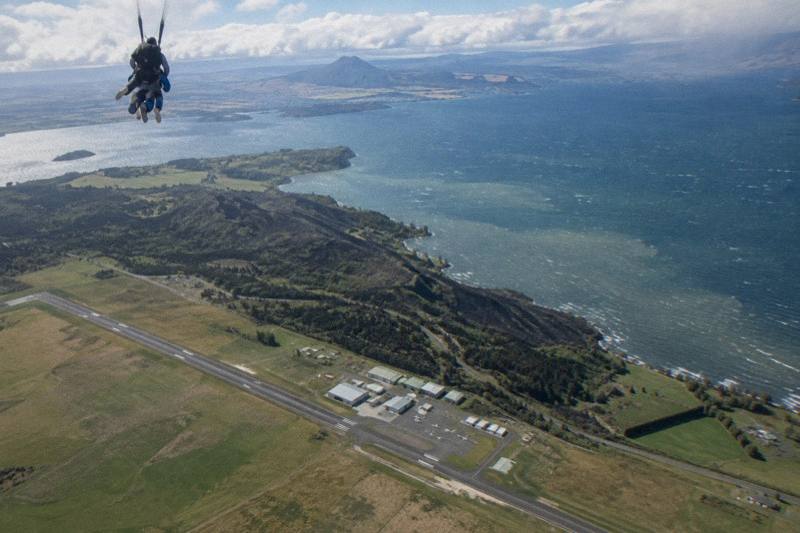
How Fast Do You Fall On A 15000 Ft Skydive?
The Taupo operator states no speed in km/h for its 15,000 ft jump. What it does state is freefall time: almost 60 seconds. Here is how to compare the four heights honestly.
The honest starting point: the Taupo operator states no speed in km/h or mph for any of its jumps. Nothing is printed here that the operator has not said, because invented numbers are how people end up disappointed on the day. What the operator does state, clearly and for every height, is how long the freefall lasts. At 15,000 ft that is almost 60 seconds, up to 60. At 12,000 ft it is almost 40 seconds, and at 16,500 ft it is over 70 seconds.
Seconds turn out to be the more useful figure anyway. Speed on paper tells you very little about what a jump feels like, while freefall time is the number that changes the experience from height to height. This article works through what is stated, what is not, and how to use the freefall figures to choose between the four heights the operator offers.
The operator states no speed figure for the 15,000 ft Taupo jump, in km/h or mph, so this article quotes none; instead it publishes freefall time, which reaches almost 60 seconds from 15,000 ft, roughly twenty seconds more than the almost 40 seconds it gives for the 12,000 ft jump, making freefall seconds the honest way to compare the two.
The instinct to want a speed number is understandable. Skydiving is sold on speed in almost every film clip and advertisement, and a km/h figure feels like a way to grasp the experience before committing. But a tandem freefall does not sit at one constant speed, and any single number flattens that. Without an operator-stated figure, this article will not manufacture one.
What the operator does publish, per height, is duration. The 15,000 ft page says almost 60 seconds, and elsewhere up to 60 seconds, so treat both as the same claim with a small margin. The 12,000 ft page says almost 40 seconds. The 16,500 ft page says over 70 seconds. The 9,000 ft page contradicts itself on its own freefall seconds, giving two different numbers in one sentence, so no figure for that height is printed here at all. The operator's FAQ page and prices page are where those statements live.
If you are weighing whether to book, the practical translation is simple. Choosing 15,000 ft over 12,000 ft buys you roughly half again as much freefall. Choosing 16,500 ft, the operator's highest jump, buys a little more again, though it comes with extra conditions covered below. The 15,000ft Tandem Skydive sits in the sweet spot for most first-timers: long enough that the freefall feels like a distinct chapter of the jump, without the extra waiver or age rule of the highest option.
Why Seconds Matter More Than Speed When You Compare Heights
Because freefall time is the only figure the operator states consistently across its four heights, and it is the one that changes the experience in a way you actually notice. Twenty extra seconds of freefall is a materially longer jump; a speed difference between exits, if any exists, is not stated and would be hard to feel from second to second. Comparing stated seconds is honest; comparing imagined speeds is guesswork.
Think about what you are actually buying with altitude. The aircraft climb takes the same kind of journey regardless of exit height. The canopy ride after the parachute opens is a separate, slower phase. The variable between the jumps is the freefall window: how long you spend in the part of the skydive everyone signs up for. The operator's ladder makes that window the clearest differentiator it publishes.
There is a second, quieter reason seconds serve you better. A speed figure invites comparison with things it cannot be compared with, like a car or a fairground ride, and that comparison usually misleads. Freefall seconds invite a simpler question: how much of this do I want? For a first jump, almost 40 seconds is a substantial experience. For someone who suspects once will not be enough, almost 60 is the safer bet against regret.
The heights the operator offers are 9,000, 12,000, 15,000 and 16,500 ft. The operator also describes its 16,500 ft jump as "nearly 18,000 ft above sea level", a claim worth reading carefully: the exit is 16,500 ft, and the extra margin comes from Taupo's elevation above sea level. It is the operator's own framing and is presented here as exactly that. For help placing 15,000 ft on that ladder, see the guide on how high the Taupo jumps actually are.
The Four Heights Side By Side
The operator's stated freefall times are: almost 40 seconds at 12,000 ft, almost 60 seconds (up to 60) at 15,000 ft, and over 70 seconds at 16,500 ft. The 9,000 ft freefall seconds are not printed here because the operator's own page gives two conflicting numbers. Skydive-only prices, stated in NZD per person, run from NZD 279 at 9,000 ft to NZD 529 at 16,500 ft.
| Height | Freefall (operator-stated) | Skydive-only price (NZD, per person) | Notes |
|---|---|---|---|
| 9,000 ft | not stated (operator page is self-contradictory) | NZD 279 | no outside freefall camera; handycam package available |
| 12,000 ft | almost 40 seconds | NZD 329 | the tour page for this height shows 2 hours, 5.0 from 457 reviews, from US$194 |
| 15,000 ft | almost 60 seconds, up to 60 | NZD 379 | this article's related tour jumps from here |
| 16,500 ft | over 70 seconds | NZD 529 | ages 14+, high-altitude waiver signed at the drop zone, exit height may be adjusted slightly |
Read the price column as the operator's own NZD ladder; the booking pages for the individual tours show their own figures. The 12,000ft Tandem Skydive is the only tour of the three with a printed rating, 5.0 across 457 reviews, and a printed price, from US$194. The 15,000ft Tandem Skydive carries no rating, review count, price or duration on its booking page, so ask the operator, phone 0800 826 336, for the current figures. The Helicopter Flight, 15,000ft Skydive is new and has no rating yet either.
The jump between 12,000 and 15,000 ft costs NZD 50 more on the operator's ladder and buys roughly twenty more stated seconds. The jump from 15,000 to 16,500 ft costs NZD 150 more for a little over ten more seconds, plus the age rule and the waiver. Diminishing returns arrive somewhere in that last step, which is why 15,000 ft is where most of the value sits for a one-off jump.
If camera footage is part of the plan, the altitude choice interacts with it. An outside freefall camera, where a separate camera flyer joins you, is not offered at 9,000 or 16,500 ft; a handycam package is. The operator's photo and video page sets out the packages. The 15,000 ft tier has the fullest camera range, including the Legend package with freefall plus selfie media plus an exit photo, so height and footage decisions genuinely belong together.
What Almost 60 Seconds Of Freefall Actually Means
Almost 60 seconds is long enough for the freefall to stop being a blur and become something you can remember in sequence. In the operator's own framing, it is fifty percent more freefall than the 12,000 ft jump. Nothing here promises what you will feel; the point is simpler, that a minute is a meaningful block of time to spend in freefall rather than a flash you later struggle to recall.
Be careful with the word "feel", because this article will not describe sensations the facts file does not support. What can be said is arithmetic. At almost 40 seconds, a 12,000 ft freefall is over before most people settle into it. At almost 60, the stated window is half as long again. The operator presumably rounds these figures, which is why "up to 60" appears alongside "almost 60"; take the pair as one claim with a little slack either side.
For planning purposes, the wider durations matter too. The operator says the skydive portion of a visit is about 30 minutes, and that most people are finished in about 2 hours, with its FAQ suggesting you allow 2 to 3 hours and its terms a full 3 hours. Those are operator-wide statements about the day, not per-altitude figures, so do not read extra seconds of freefall as extra hours at the drop zone. The 15,000 ft freefall is longer by seconds, not by half a day.
Where the 15,000 ft jump fits into a bigger day out is covered in the guide to building a Taupo skydive day plan, and the question of whether the higher jump justifies its price is worked through in choosing between 12,000 and 15,000 ft.
Put the operator's own numbers side by side and the shape of the visit becomes clear. Nearly 60 seconds of freefall sits inside a skydive portion the operator puts at about 30 minutes, so the fall itself is roughly one part in thirty of that block. Most of the skydive, by the clock, is not freefall.
The Helicopter Flight, 15,000ft Skydive combo is the clearest example of paying for time outside the freefall. It is priced at NZ$599 per person against NZD 379 for the 15,000ft Tandem Skydive, so the helicopter leg accounts for the NZ$220 difference. What it adds is a 12-minute flight before what the operator calls the same 15,000 ft jump, which means the freefall figure is unchanged; the extra minutes come before exit, not after it. The combo also carries a minimum of 2 passengers, so a solo booker needs someone else on the same flight.
On how fast you fall, the operator publishes no speed figure, no km/h and no mph, which leaves the seconds of freefall as the one performance number it commits to. It is also the number to use when comparing this jump with others, because it comes from the operator rather than from anywhere else.
How Fast Is The Helicopter Combo Version?
The Helicopter Flight, 15,000ft Skydive combo includes the same stated freefall, almost 60 seconds or up to 60, because it is the same 15,000 ft jump after a 12-minute helicopter flight. The helicopter company runs the flight part, and the combo carries its own conditions: from NZ$599 per person with a minimum of two passengers, and the booking page says it is not suitable over 136 kg (300 lb).
That weight limit belongs to the combo booking page only. The skydive-only tours have no stated maximum weight; the operator instead says jumpers up to and over 100 kg are assessed individually by the Safety Officer, and asks anyone over 100 kg to contact the office. Do not carry the combo's 136 kg figure across to the 15,000ft Tandem Skydive, because the pages do not.
The combo's shape is fixed: a 12-minute helicopter flight, then the 15,000 ft skydive, with a free exit photo from the operator and photos and videos included per the booking page. The operator's combo schedule runs a 1pm helicopter and a 2pm skydive, flights leave from Huka Falls Heliport, and the booking page gives 415 Huka Falls Road, Wairakei as the start point. Transport back to the helicopter base or your accommodation is included per the combo page.
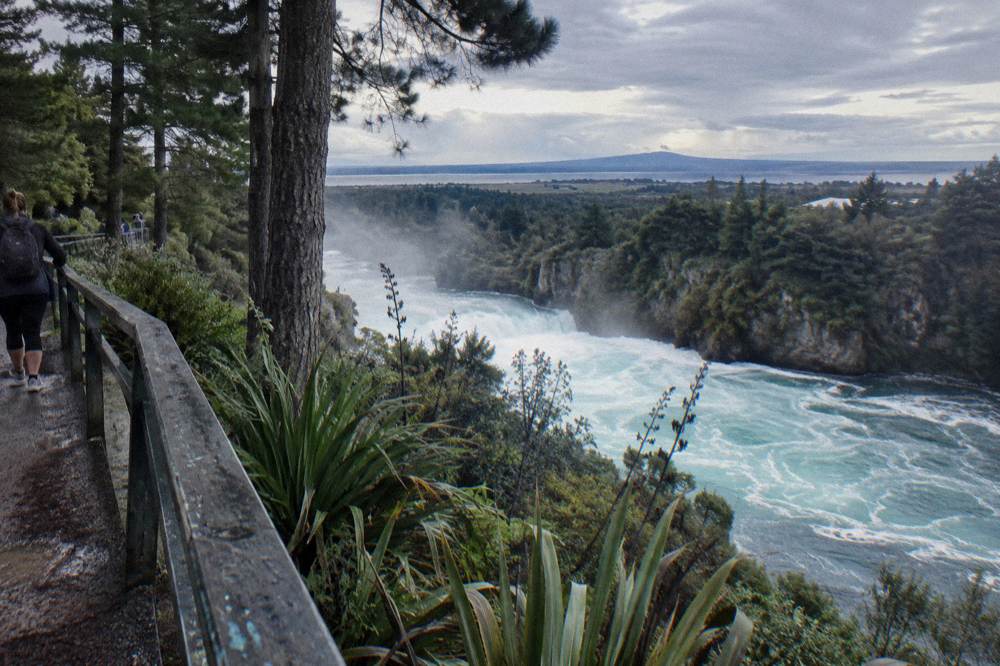
Is the freefall in the combo faster than a standard 15,000 ft jump? No stated figure says so, and the premise is the same jump. The difference is everything around it: arriving at altitude awareness by helicopter first, then the aircraft climb to exit height for the skydive itself. If the appeal is the longest stated freefall rather than the flight over Huka Falls, the plain 15,000ft Tandem Skydive delivers the same stated seconds. The combo's own details are unpacked in the guide to the Taupo heli and skydive combo.
Does A Higher Exit Mean A Faster Fall?
Not in anything the operator states. No speed figure is published for any height, so any claim that 16,500 ft is "faster" than 12,000 ft is invention. What the operator does state is that higher exits give longer freefall: over 70 seconds at 16,500 ft versus almost 40 at 12,000 ft. The published benefit of altitude is duration, and that is the only benefit this article can report.
The physics of why higher exits mainly buy time rather than a different experience of speed can be left to the engineers. For a buyer, the practical framing is enough: the operator prices altitude in freefall seconds, and its own pages market the heights by those seconds. When a seller's marketing skips a number, an honest article skips it too.
Two conditions attach to the top of the ladder. The 16,500 ft jump is restricted to ages 14 and over, requires a high-altitude waiver signed at the drop zone, and the operator says it may adjust the exit height slightly. Anyone weighing the highest jump should also know it is where the outside freefall camera is not offered, only the handycam package, per the operator's terms.
What Trips People Up When Comparing Fall Speeds And Heights
Three confusions come up again and again: expecting a printed speed figure that does not exist, assuming one tour's rating or price applies to another, and mixing up the freefall window with the whole visit. The operator states freefall seconds, not speeds; the 5.0 rating and from US$194 price belong only to the 12,000 ft tour; and the about 2 hours on site is an operator-wide statement, not a per-height duration.
The first trap is the speed number itself. People arrive having read a km/h figure somewhere and feel shortchanged when the drop zone talks in seconds. Treat freefall seconds as the real currency and the confusion disappears: almost 40, almost 60, over 70, reading up the ladder.
The second trap is cross-contaminating products. The 12,000ft Tandem Skydive's rating, price, duration and 24-hour free cancellation belong to that tour only. The 15,000ft Tandem Skydive carries none of those figures on its booking page. The combo's weight limit and included media belong to the combo only. Each fact is stated on its own page, and this article has kept them apart accordingly.
The third trap is arithmetic of the wrong kind. Adding the 12-minute helicopter flight to the skydive to invent a combo duration, or multiplying freefall seconds by an imagined speed to get a distance, produces numbers no operator page supports. The stated durations are: about 30 minutes for the skydive portion, about 2 hours finished, allow 2 to 3 hours, and no total for the combo. For more on the honest handling of these gaps, including the 15,000 ft tour's missing figures, ask the operator directly on 0800 826 336.
One booking-side note: the 12,000ft Tandem Skydive offers free cancellation up to 24 hours before, and the combo's booking page also shows 24-hour free cancellation, but no cancellation terms are stated for the 15,000ft Tandem Skydive itself. Confirm before booking rather than assuming the policy carries across. The operator's terms and conditions are the governing text for the general policy.
A final pointer for anyone whose real question is whether the jump justifies the money: the length of the freefall is only one input. The view over Lake Taupo, the certificate and neck buff included with every jump, and the camera packages all shape the value, and the deeper comparison lives in the question of whether skydiving is worth the price. The site behind this article, Taupo Tandem Skydive, works through those trade-offs in detail.
A practical way to apply all of this is a three-column comparison, one column each for the 12,000ft Tandem Skydive, the 15,000ft Tandem Skydive, and the combo, filled in only with what each product's own page states. The 12,000 ft column is the fullest: the 5.0 rating, the from US$194 price, and the
Common Questions About Falling Speed On A 15000 Ft Skydive
How Fast Do You Fall On A 15000 Ft Skydive?
No speed figure in km/h or mph is stated by the operator for the 15,000 ft jump, so none is printed here. What the operator states is the freefall time: almost 60 seconds, up to 60. That is the figure to use when comparing the heights.
Is 15,000 Ft The Highest Taupo Skydive?
No. The operator's highest jump is 16,500 ft, which it describes as "nearly 18,000 ft above sea level". That highest jump is restricted to ages 14 and over and requires a high-altitude waiver signed at the drop zone.
How Much More Freefall Does 15,000 Ft Give Than 12,000 Ft?
Roughly twenty stated seconds: almost 60 seconds at 15,000 ft versus almost 40 seconds at 12,000 ft. On the operator's NZD ladder the step between them is NZD 50 per person.
Does The Helicopter Combo Give A Longer Freefall?
No stated figure says so. The combo includes the same 15,000 ft skydive, so the stated freefall is the same, almost 60 seconds or up to 60. What the combo adds is a 12-minute helicopter flight before the jump.
Why Does The 9,000 Ft Freefall Time Not Appear Anywhere?
The operator's own 9,000 ft page gives two different freefall figures in one sentence, so no number is printed for that height. The 9,000 ft jump is still offered, at NZD 279 per person on the operator's ladder.
How Long Does The Whole 15,000 Ft Visit Take?
No duration is stated on the 15,000ft Tandem Skydive's booking page. The operator's general statements are: skydive portion about 30 minutes, most people finished in about 2 hours, and allow 2 to 3 hours per its FAQ, or 3 hours per its terms.