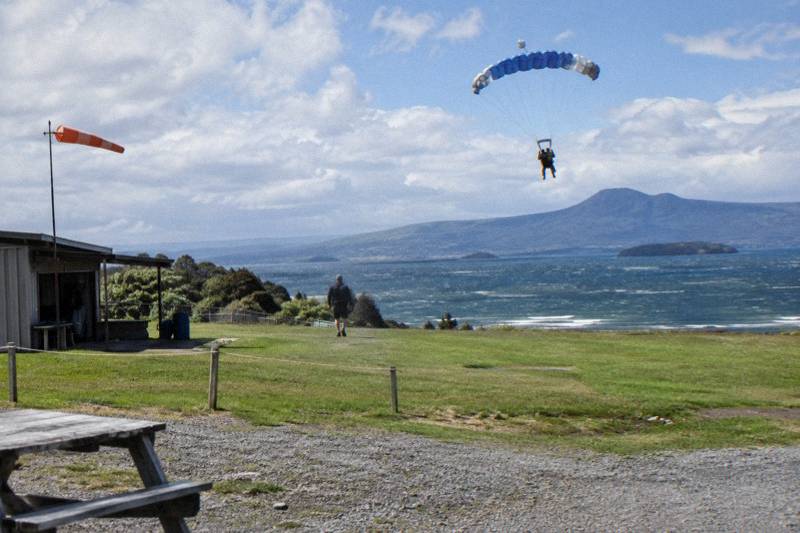
Taupo Skydive Photo And Video Packages: Are They Worth It?
The camera package is the add-on most jumpers agonise over at the drop zone. Here is exactly what each Taupo package contains, what it costs at each height, and how the choice actually works.
Short answer
The Taupo operator sells four camera packages, Ace, Pro, Guru and Legend, built from two camera types: a Selfie cam on the tandem master's wrist and a Freefall cam flown by a separate camera flyer. Package totals including the jump run from NZD 438 to NZD 759 depending on height. Booking the camera package online carries a 10 percent discount, and media arrives by email as a link.
The jump lasts less time than most people expect; the footage is what lasts. At the Taupo drop zone the camera decision is made before you suit up, and the choice between packages is genuinely a choice, because the price gap between the cheapest and the most complete option is wide. This guide lays out what the operator actually sells, what each bundle contains, and where the value sits at each jump height, without any verdict on the quality of the footage, which no page can promise in advance.
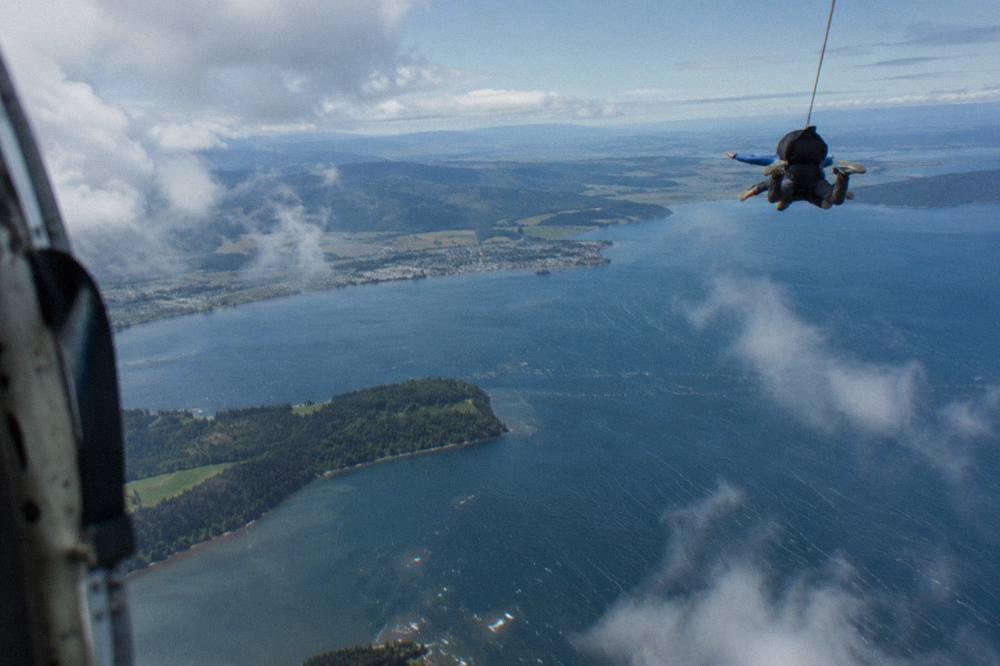
For the wider picture on jump heights and what to expect on the day, see skydiving in Taupo and the first time skydiving walkthrough.
| Fact | Detail |
|---|---|
| Camera systems | Selfie cam (tandem master wrist cameras) or Freefall cam (separate camera flyer) |
| Packages | Ace, Pro, Guru, Legend |
| Camera-only price span | From NZD 25 up to NZD 300 |
| Online booking discount | 10 percent off a camera package booked online |
| Delivery | Media emailed as a link |
| Included free with every jump | Certificate of completion and a neck buff |
| Not offered | Outside freefall camera at 9,000 and 16,500 ft (handycam package is) |
What Camera Options Exist At The Taupo Drop Zone?
The operator sells camera coverage through two systems. The Selfie cam is a set of wrist cameras worn by the tandem master; the Freefall cam is a separate camera flyer who jumps alongside you. Those systems are bundled into the four named packages, Ace, Pro, Guru and Legend, that the operator prices its jumps around.
The distinction matters more than the names suggest. Ace and Pro packages are built on the Selfie cam: Ace delivers HD photos, Pro delivers HD video plus photos. Guru and Legend involve the Freefall cam: Guru delivers freefall HD video and photos, while Legend adds selfie video and photos plus an exit photo on top of the freefall coverage. So the real fork in the road is not "photos or video" but "attached to the instructor's wrist or flown beside you".
| Package | Camera system | HD photos | HD video | Exit photo |
|---|---|---|---|---|
| Ace | Selfie cam (wrist cameras) | Yes | No | No |
| Pro | Selfie cam (wrist cameras) | Yes | Yes | No |
| Guru | Freefall cam (camera flyer) | Yes | Yes | No |
| Legend | Freefall cam plus selfie cam | Yes | Yes | Yes |
The operator's photo and video packages page is the primary source for these contents, and it also lists the camera-only price span, from NZD 25 up to NZD 300. That span is broad because it runs from a basic camera option to the most complete package, so treat it as the range of the hardware add-on, not as a quote for any single package at your height.
One point of confusion worth clearing up immediately: package totals are not camera prices. The operator's pricing bundles the jump and the camera together, so the numbers most people quote, such as NZD 538 for a 15,000 ft Ace package, include the skydive itself. The camera-only portion is the difference between that total and the bare jump at the same height, which at 15,000 ft is NZD 379. Doing that subtraction for each height is the single most useful exercise before booking, and the tables further down this page give you both sides of it.
Selfie Cam Or Freefall Cam: Which Fits Your Jump?
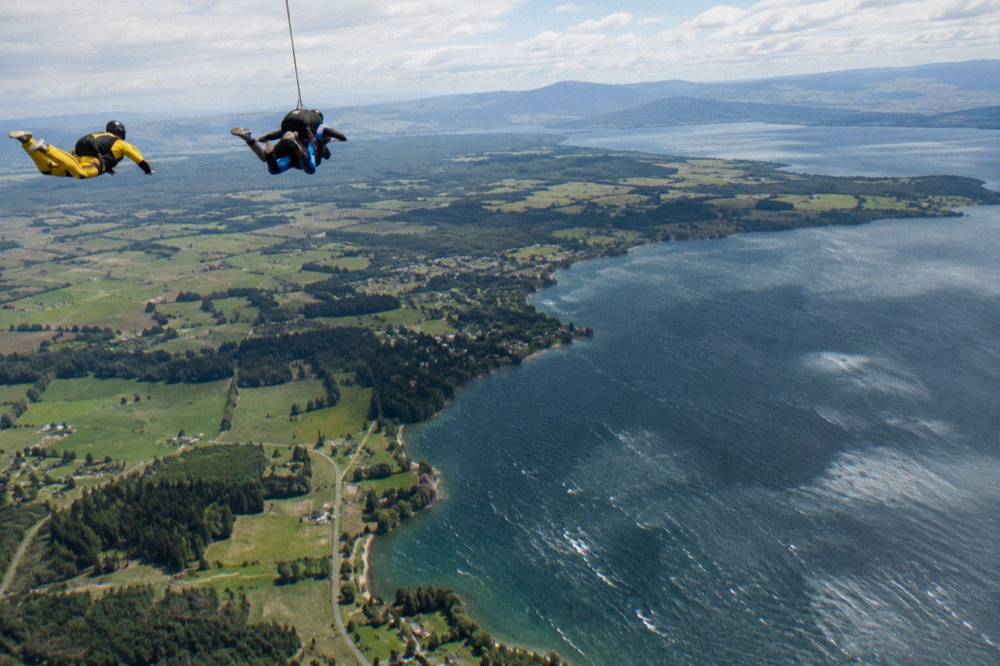
Choose the Selfie cam for close, personal framing at the lower package prices; choose the Freefall cam for the wide outside shot of your whole body in freefall. Selfie cam packages are Ace and Pro; Freefall cam packages are Guru and Legend. At 9,000 and 16,500 ft the Freefall cam is off the table entirely: only a handycam package is offered there.
The Selfie cam's strength is intimacy. Because the cameras sit on the tandem master's wrist, the framing stays on you: your expression through the exit, the fall, and the canopy ride. Its limitation is that the viewpoint never leaves the instructor's arm, so you never see yourself as a small figure against the whole of Lake Taupo. For jumpers whose main memory trigger is their own reaction, this is usually enough, and the Ace and Pro packages are the cheapest way to get it.
The Freefall cam produces the footage that looks like a documentary. A separate camera flyer exits with you, flies in formation close by, and captures your full body with the landscape behind it. That second person is precisely why the option carries conditions: it needs a flyer available and a height regime where it is offered. The operator's terms restrict it away from 9,000 and 16,500 ft, so Guru is offered at 12,000 or 15,000 ft and Legend at 15,000 ft only.
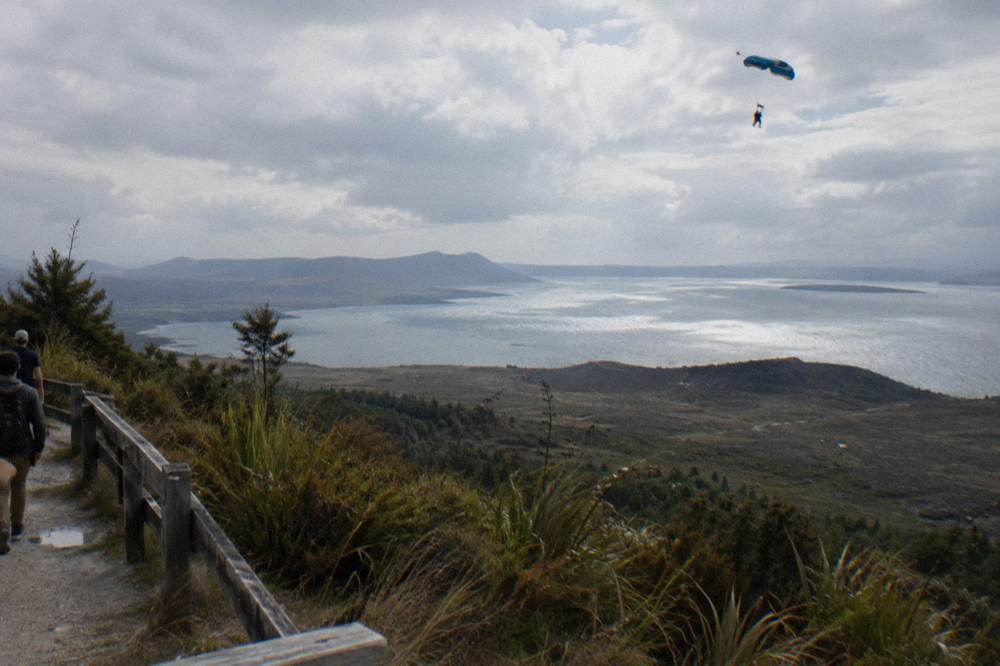
A third route exists for one specific product. The Helicopter Flight, 15,000ft Skydive combo includes an exit photo free, per the operator's combo page, and the booking page says photos and videos are included on that tour. If footage is a priority and you were considering the combo anyway, that inclusion belongs in the comparison, though its exact scope is best confirmed with the operator on 0800 826 336 before booking. The combo details live in the Taupo heli and skydive combo guide.
The altitude choice interacts with the camera choice in one more way: freefall length. The operator states almost 40 seconds of freefall at 12,000 ft and almost 60 seconds at 15,000 ft. More freefall means more of the footage that people actually rewatch, which is one honest argument for pairing a bigger camera package with a higher jump rather than loading media onto a shorter one.
What Do The Photo And Video Packages Cost?
At 12,000 ft the jump alone is NZD 329, and packages run NZD 488 (Ace), NZD 528 (Pro) and NZD 608 (Guru). At 15,000 ft the jump alone is NZD 379, and packages run NZD 538 (Ace), NZD 569 (Pro), NZD 658 (Guru) and NZD 759 (Legend). All figures are the operator's NZD per-person totals and include the jump itself.
| Height | Jump only | Ace (selfie photos) | Pro (selfie video + photos) | Guru (freefall video + photos) | Legend (freefall + selfie + exit photo) |
|---|---|---|---|---|---|
| 9,000 ft | NZD 279 | NZD 438 | NZD 478 | not offered | not offered |
| 12,000 ft | NZD 329 | NZD 488 | NZD 528 | NZD 608 | Not stated |
| 15,000 ft | NZD 379 | NZD 538 | NZD 569 | NZD 658 | NZD 759 |
| 16,500 ft | NZD 529 | NZD 688 | NZD 719 | not offered | not offered |
Two patterns stand out in that grid. First, the Freefall cam products, Guru and Legend, exist only at 12,000 and 15,000 ft, matching the outside-camera restriction. Second, the Legend package appears in the operator's pricing only at 15,000 ft, so if the full freefall-plus-selfie-plus-exit-photo bundle is the goal, 15,000 ft is where it is sold.
The camera-only cost of any package is simply the gap between its total and the bare jump in the same row, and that gap widens as you move up the package tiers. That arithmetic is the single most useful thing to do with the grid before booking, because it separates "what the media costs" from "what the jump costs" in a way the headline totals blur together.
The price ladder has one softener worth knowing: the operator takes 10 percent off a camera package booked online. On the biggest bundles that is a meaningful slice, and it rewards deciding before the day rather than at the counter, when nerves and time pressure do the deciding instead. The operator's prices page carries the full ladder and the surcharge notes, including a 15 percent NZ public holiday surcharge that applies to the skydive but not to photo or video, and a 1.5 percent credit-card surcharge.
If you are still weighing which jump height to attach a package to, the 12,000 vs 15,000 ft comparison walks through the freefall difference, and the 15,000ft Tandem Skydive is the height where the fullest package menu, including Legend, is available.
Run that subtraction down the columns and the grid becomes far easier to read. The Ace camera cost is NZD 159 at every height that offers it: 438 minus 279 at 9,000 ft, 488 minus 329 at 12,000 ft, 538 minus 379 at 15,000 ft and 688 minus 529 at 16,500 ft. The Pro camera cost sits at NZD 199 at 9,000 and 12,000 ft and NZD 190 at 15,000 and 16,500 ft. The Guru camera cost is NZD 279 at both 12,000 and 15,000 ft, and the Legend camera cost at 15,000 ft is NZD 380, the gap between 759 and 379. In other words, the media itself is priced flat across the ladder; every extra dollar between heights buys more jump, not more camera.
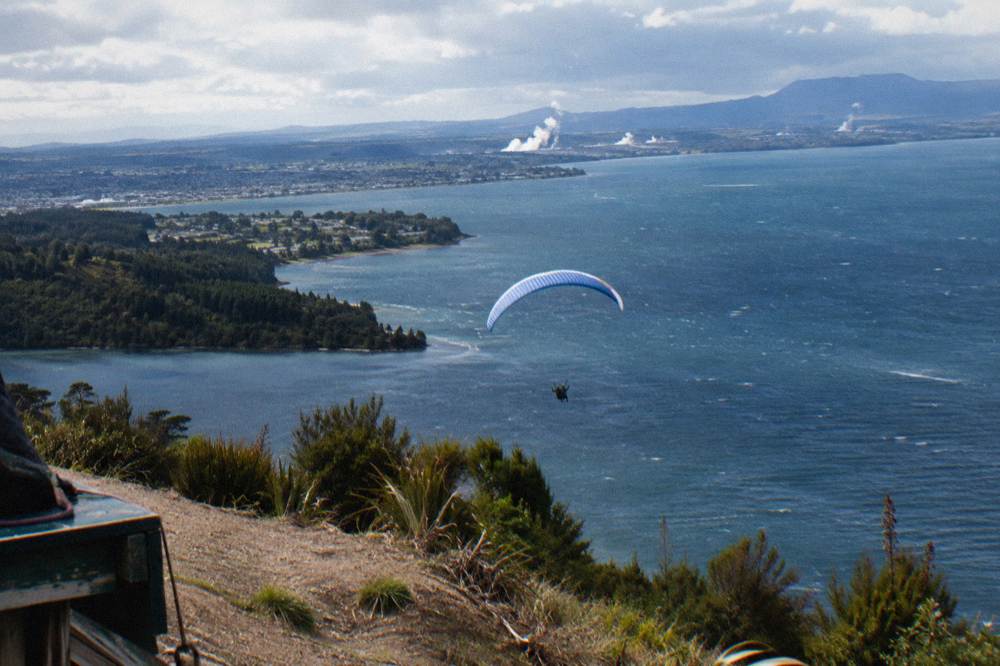
The flat camera pricing also makes the online discount easy to size. The public holiday picture works differently: because the 15 percent surcharge applies to the skydive but not to photo or video, a holiday booking raises the jump side of the bill while the camera gap you calculated above holds steady. The 1.5 percent card fee is the smallest of the extras, a little over NZD 11 on even the largest total. The three adjustments also trigger differently: the ten percent saving depends on booking online, the holiday surcharge on the date, and the card fee on how you pay.
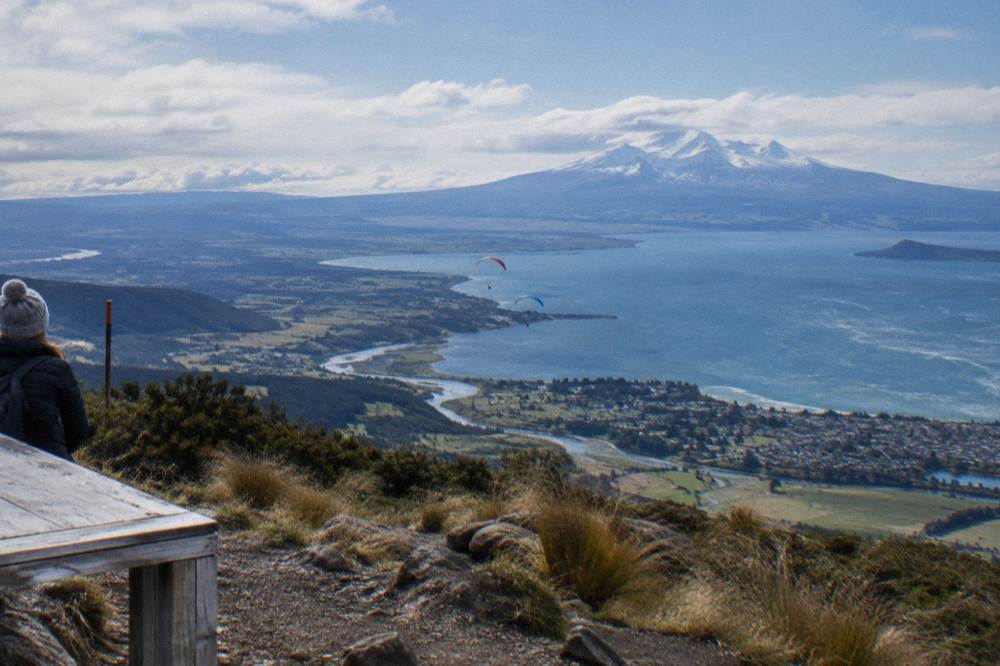
Two planning consequences follow from the same numbers. The tallest jump on the grid, 16,500 ft, carries the shortest media menu, with Guru and Legend both marked "not offered", so its ceiling is the Pro package at NZD 719, a lower top line than the 15,000 ft Legend total of NZD 759 despite the dearer jump. And because camera cost does not scale with height, the media decision and the height decision can be made separately: pick the bundle for what you want to rewatch, then pick the height for the freefall, and the arithmetic will not punish the pairing. One loose end merits a check before booking: the 12,000 ft Legend cell reads "not stated" rather than "not offered", so the operator's prices page is the place to confirm whether that bundle exists at that height at all.
Can You Take Your Own Camera On A Tandem Skydive?
No page for these tours states a personal-camera policy, and the structure of the packages implies the answer: the operator sells wrist cameras and a flown camera flyer as its media products, and its terms allow only a handycam package at 9,000 and 16,500 ft. Treat the personal-camera question as a rule to confirm, not assume: ask the operator on 0800 826 336 before your jump day.
What the facts do support is the shape of the restriction. The outside freefall camera, the separate flyer setup, is explicitly not offered at 9,000 and 16,500 ft, and the operator's terms name the handycam package as what exists there instead. That is an operator equipment decision, not a judgement about your gear. Where a camera flyer is not part of the exit, the wrist-camera products are the coverage on offer. The full index of guides sits on Taupo Tandem Skydive.
For jumpers who want footage of the whole day rather than the freefall alone, the practical route is ground photography. Spectators at the drop zone can shoot the landing, the sign-in and the certificate moment without any restriction the pages state, and every jump includes that certificate of completion plus a free neck buff, which are the physical keepsakes on top of whatever media you buy. The spectators and groups guide covers the viewing side of the day.
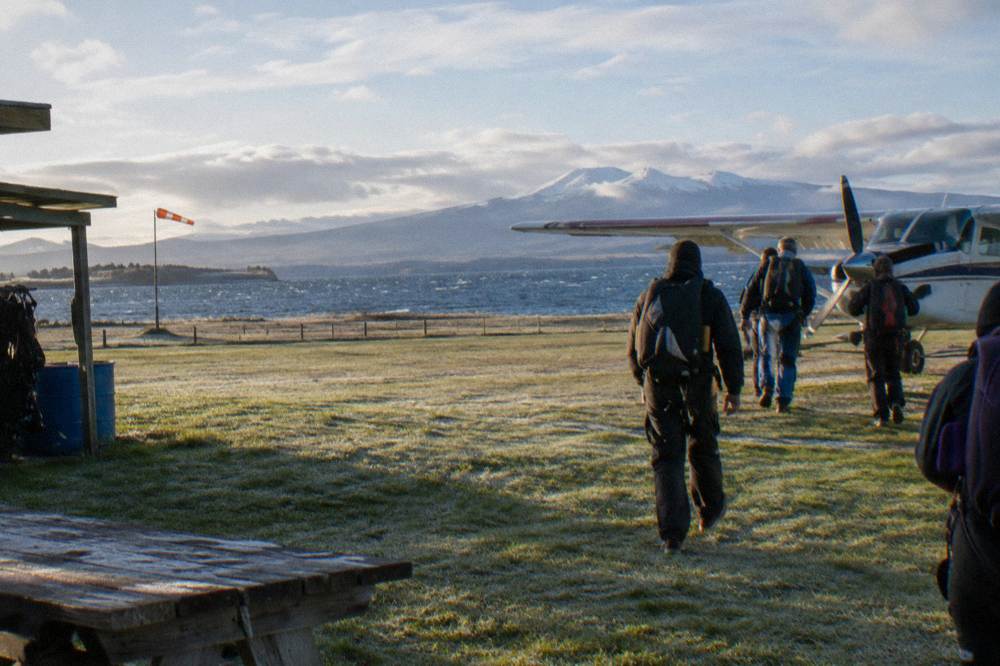
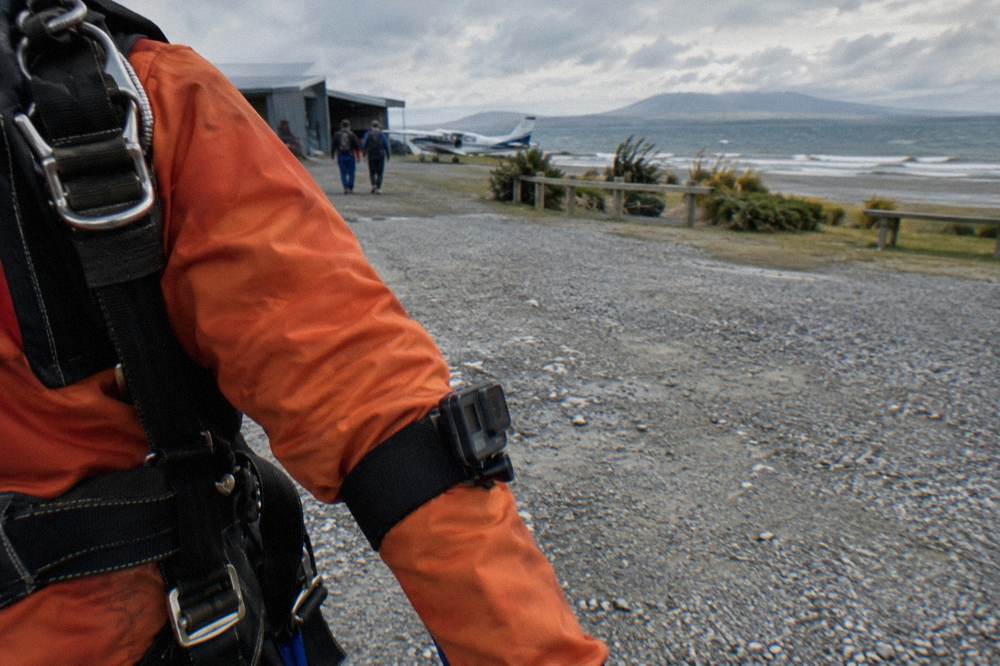
If your own camera is a GoPro-style mount you were hoping to attach to yourself or the instructor, that is exactly the question to put to the operator by phone. The pages here do not rule on it either way, and a policy stated verbally on the day is the only reliable answer. Note also that glasses fit under the supplied goggles, per the operator's FAQ, so eyewear is not the barrier to clear footage that some people expect.
How Do You Get The Footage Afterward?
The operator emails your media as a link, and that is the stated delivery method for all the packages. Nothing in the operator's pages promises a delivery time for that link, so if you are flying out of Taupo the next morning, confirm timing at sign-in. Payment for the jump itself is taken after the jump, per the operator's booking terms.
The emailed-link model has one practical consequence: your footage lives wherever the link lives. Save it, back it up, and do not treat the email as permanent storage. The packages deliver HD photos and HD video depending on tier, and the Legend package adds the exit photo, the one frame of the doorway moment that no post-jump photo can reconstruct.
Weather is the other force in this part of the deal. A weather hold means rebooking the same day or a later day, or cancelling free if you cannot return, and prepaid weather cancellations may be refunded excluding booking and card fees, with gift vouchers not cash-refundable. The camera package you booked follows the jump, not the weather: no jump, no footage, and the weather and cancellations guide unpacks the full policy. The operator's advice to call 30 minutes before arrival or pickup to confirm the weather is the single habit that saves the most wasted trips.
One more media edge case sits in the operator's terms: if photo or video equipment malfunctions, the terms describe no charge for the media or a NZD 50 refund on the jump price. The raw wording is truncated in the verified capture, so the exact conditions are worth confirming on the day rather than relied upon, but the existence of the clause tells you equipment failure is a scenario the operator has priced and planned for.
Which Height Gets The Best Value Package?
Judged on camera cost versus freefall length, 15,000 ft has the fullest menu and the longest footage window: almost 60 seconds of freefall against the operator's stated "almost 40 seconds" at 12,000 ft, plus the exclusive Legend package at NZD 759 including the jump. At the value end, the 12,000 ft Ace package at NZD 488 is the cheapest jump-plus-media route at a height where the Freefall cam exists.
Here the decision logic loops back to the jump products themselves. The 12,000ft Tandem Skydive is the tour with the printed track record, rated 5.0 across 457 reviews, from US$194, with free cancellation up to 24 hours before, and its 2 hour duration is the operator's own figure for a finished visit. Its camera ladder, Ace, Pro and Guru at NZD 488 to NZD 608, covers every tier except Legend. The 15,000ft Tandem Skydive carries no printed rating, price or duration on its booking page; what is solid is the operator's own side: NZD 379 for the jump, almost 60 seconds of freefall, and the full four-package menu.
The high end of the operator's ladder behaves differently. At 16,500 ft the jump alone is NZD 529, packages are Ace NZD 688 and Pro NZD 719, and there is no Freefall cam at all, only the handycam package the terms allow. The operator calls 16,500 ft its highest jump, "nearly 18,000 ft above sea level" by its own claim, with over 70 seconds of freefall, ages 14 and over, and a high-altitude waiver signed at the drop zone. So the most expensive height is also the one with the narrowest media menu, a trade few jumpers see coming.
What Trips People Up When Choosing A Package?
The three recurring errors are assuming package totals are camera prices, buying a Freefall cam product at a height where it is not sold, and deciding at the drop zone counter instead of online. The first inflates the perceived price, the second is planned for but impossible, and the third forfeits the 10 percent online camera discount to time pressure. A fourth, quieter mistake is forgetting that weather, not preference, decides whether any of it happens.
Read the grid again with fresh eyes. A jumper who hears "NZD 759" and pictures a camera bill has doubled the real cost in their head: that figure is the 15,000 ft jump plus the Legend package together. A jumper set on Guru coverage who books the operator's highest option, 16,500 ft, will find only the handycam package waiting. And a jumper who defers the media decision to the day arrives with the clock and the nerves against them, at the exact moment the discount no longer applies.
The eligibility edges matter too. Weight over 100 kg is assessed individually by the Safety Officer rather than capped, per the operator's FAQ, and the combo booking page alone states a 136 kg (300 lb) limit that never applies to the skydive-only tours. Media follows the jump, so anything that touches the jump touches the footage. When in doubt on any edge, the operator's FAQ page and the phone line, 0800 826 336, are the two places with answers the aggregators do not have.
Choosing a package, at bottom, is choosing which version of the day you will still have in five years. The Selfie cam keeps your face; the Freefall cam keeps the world. The certificate and the neck buff come either way.
Common Questions About Taupo Skydive Photo And Video Packages
What Camera Options Exist At The Taupo Drop Zone?
A Selfie cam on the tandem master's wrist cameras and a Freefall cam flown by a separate camera flyer, sold as four packages: Ace, Pro, Guru and Legend. Camera-only pricing spans NZD 25 to NZD 300.
Selfie Cam Or Freefall Cam: Which Fits Your Jump?
Selfie cam (Ace, Pro) for close framing at the lower package prices; Freefall cam (Guru, Legend) for outside wide-shot coverage. The Freefall cam is not offered at 9,000 or 16,500 ft.
What Do The Photo And Video Packages Cost?
Package totals including the jump run from NZD 438 (9,000 ft Ace) to NZD 759 (15,000 ft Legend). At 12,000 ft: NZD 488, 528, 608. At 15,000 ft: NZD 538, 569, 658, 759. A 10 percent discount applies to camera packages booked online.
Can You Take Your Own Camera On A Tandem Skydive?
No stated personal-camera policy appears for these tours. The operator sells its own wrist and flyer camera products, and its terms allow only a handycam package at 9,000 and 16,500 ft. Ask the operator on 0800 826 336 before your jump day.
How Do You Get The Footage Afterward?
Media is emailed as a link, per the operator. No delivery time is stated on the pages, so confirm timing at sign-in if you are leaving Taupo soon after the jump.
Which Height Gets The Best Value Package?
15,000 ft has the fullest menu (including Legend, NZD 759 with the jump) and the longest stated freefall at almost 60 seconds. The cheapest full package route with a Freefall cam option is the 12,000 ft Ace at NZD 488.