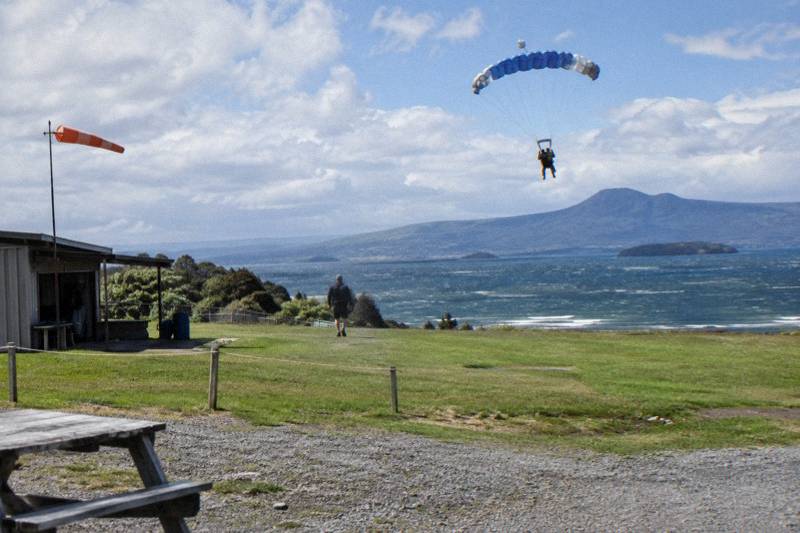
Why Does Your Stomach Not Drop During Skydiving?
The honest answer to why a tandem skydive usually does not give you the stomach drop of a roller coaster, and what freefall actually feels like over Lake Taupo.
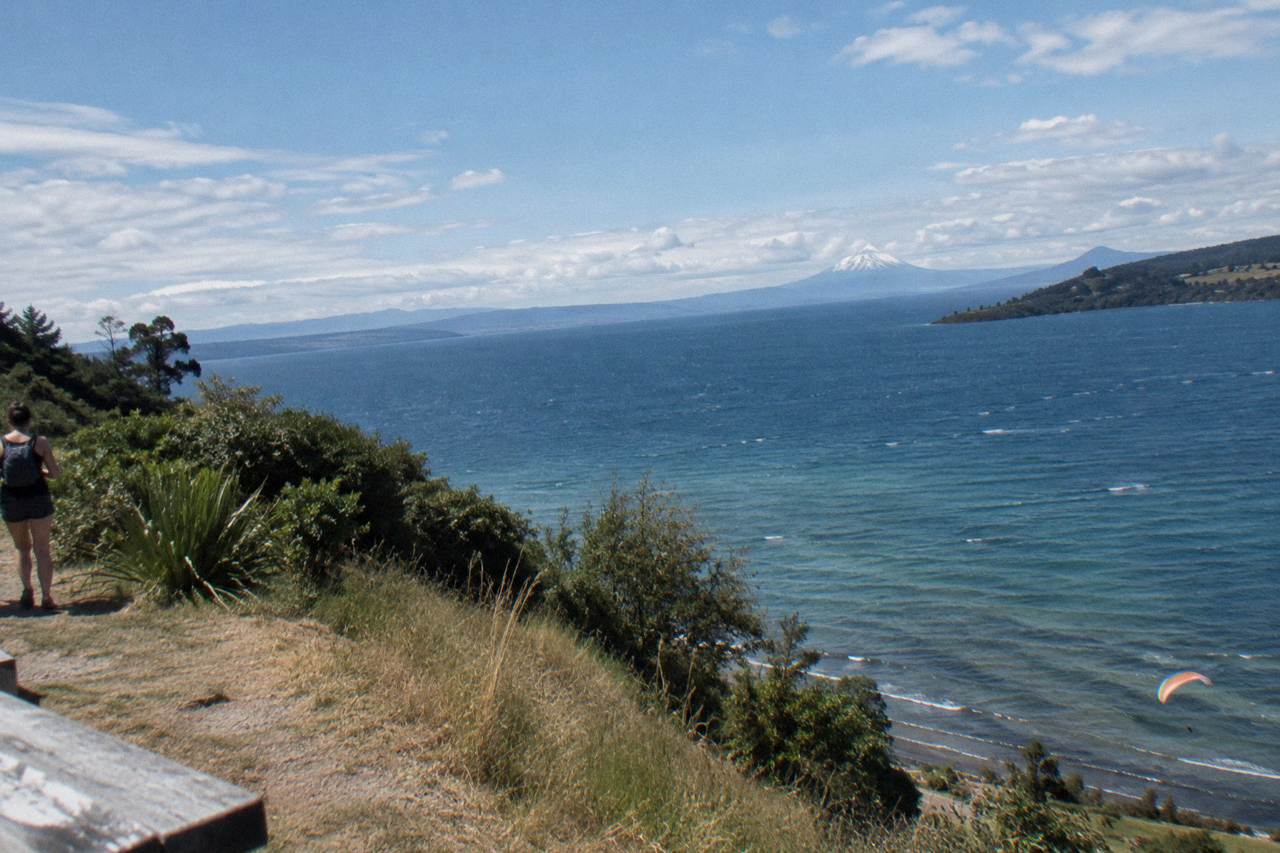
Because the stomach-drop feeling comes from sudden acceleration, and a skydive starts at the aircraft's forward speed rather than from a standstill. When you exit, gravity builds your fall speed gradually over several seconds, so the inner ear registers steady, sustained motion instead of the sharp lurch that a coaster's first hill produces. Jumpers commonly report that the sensation is more like floating on a cushion of air than falling, and that the anticipated drop simply never arrives.
That answer surprises people, and it is worth unpacking, because the expectation itself is the biggest source of pre-jump nerves. Almost every first-time jumper arrives having braced for the same sensation a log flume or a steep coaster delivers: that hollow, swooping lurch somewhere behind the ribs. It is one of the most commonly reported surprises in skydiving that the lurch does not come. The physics behind that surprise is simple, and understanding it before you book tends to make the whole day calmer.
None of this is a promise about what your body will do. Everyone processes motion a little differently, and the operator is explicit that weather and safety checks decide whether a jump runs. What follows is the general explanation of the effect, framed the way jumpers themselves usually describe it, plus the freefall figures the Taupo operator states for each altitude.
If you are weighing whether to book at all, these are the three Taupo options this site covers: the entry jump, the higher exit, and the helicopter combination.
Where The Stomach Drop Actually Comes From
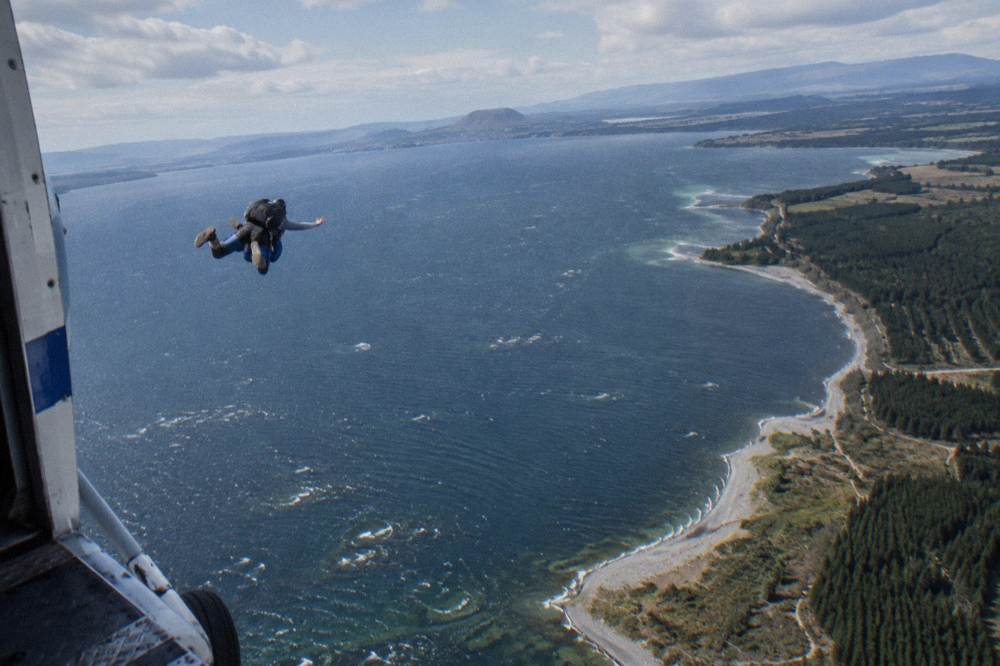
The stomach drop is an inner-ear response to rapid changes in acceleration, not to height or falling itself. Coasters and drops create it by hurling a body from rest to high speed in a second or two, which the vestibular system reads as a jolt. A skydive spreads the same build-up of speed across roughly ten seconds of freefall, so the jolt never happens.
Your sense of balance lives in the vestibular system of the inner ear, which does not measure speed. It measures changes in speed and direction. A coaster's first drop works on this system brutally: the train crests a hill slowly, then plunges, and within a second or two your body is moving fast. Organs that were riding along settle differently for a moment, nerves fire, and the brain produces that distinctive swooping sensation. The same thing happens in a car cresting a bridge too quickly or a lift dropping a floor.
Freefall works differently from the very first instant. The moment you leave the aircraft you are already moving at the plane's forward speed, and gravity then adds downward speed progressively rather than all at once. The acceleration is steady and one-directional for the whole fall. A steady input does not register as a jolt. The inner ear largely filters it out, the same way it filters out cruising at a constant speed on a motorway.
“They have to do it. Nathan was awesome he made you feel comfortable would I do it again hell yes thank you for the experience”
The result, as jumpers very often describe it, is wind, pressure and an odd sense of stability rather than a drop. The air itself does part of the work: at fall speeds, air resistance against your body and jumpsuit creates a firm, supporting cushion that tandem instructors call the relative wind. You are, in a real physical sense, resting on air rather than hanging in nothing. That is why the comparison jumpers reach for is not a roller coaster but a face-down ride on a powerful, steady current of wind.
Why The First Few Seconds Feel Different From The Rest
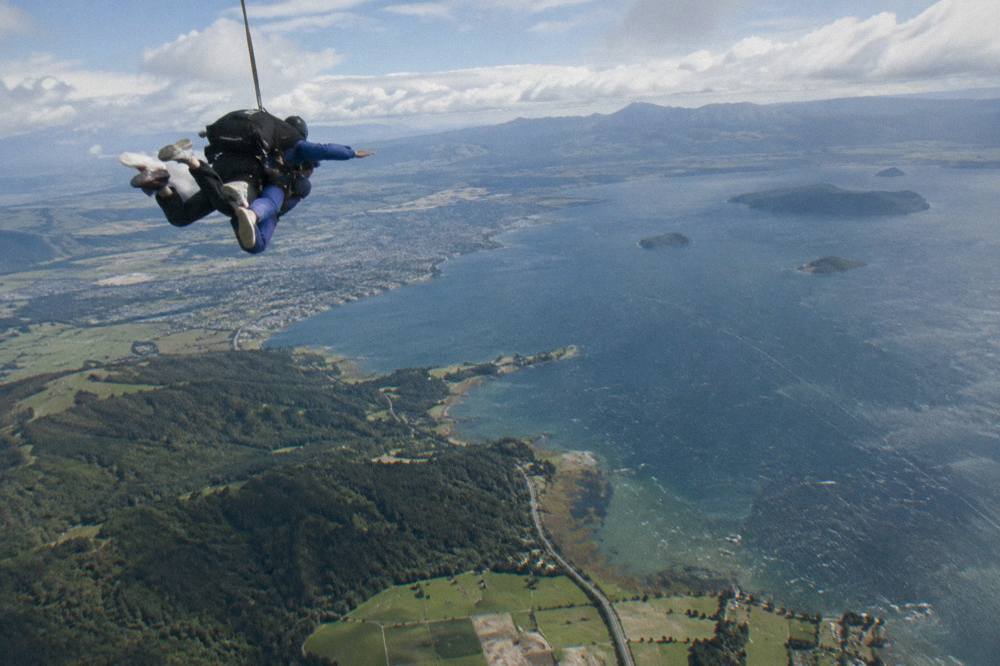
The opening seconds of freefall are the closest a skydive comes to a drop, because that is when fall speed is still building quickly. Once the pair reaches a stable belly-to-earth position, the air cushion firms up and the sensation levels into steady flight. Most jumpers say the transition happens before they have finished processing the exit itself.
Think of the fall in three phases. In the first, the exit, the body rolls into the wind and the horizontal speed of the aircraft merges into the downward fall. This is where the largest change in sensation occurs, and it is the moment jumpers most often describe as a rush rather than a drop. In the second phase, the pair stabilises on the relative wind. From here the sensation is remarkably constant: roaring wind, firm air pressure, and a view. In the third, the canopy opens, the fall slows to a gentle descent, and quiet returns.
The stabilised phase is where the time actually goes. On a Taupo jump, the operator states the freefall figures plainly: almost 40 seconds from 12,000 ft, almost 60 seconds and up to 60 from 15,000 ft, and over 70 seconds from 16,500 ft. The 9,000 ft option exists on the operator's own price ladder, but no freefall figure for it is stated anywhere, so nothing can be printed here. What the stated numbers show is that the bulk of any jump, regardless of altitude, is spent in that stabilised, cushioned phase rather than in the brief building-speed phase at the start.
A question worth asking at this point is whether to spend that freefall at 12,000 or 15,000 feet, and the honest trade-offs are laid out in the 12,000 vs 15,000 ft comparison. If your only question is what the extra money buys, the short version is: more seconds of exactly the steady, floating phase described above, not a bigger drop.
| Altitude | Operator-stated freefall | Notes |
|---|---|---|
| 9,000 ft | Not stated | available through the operator |
| 12,000 ft | almost 40 seconds | the featured tour's altitude |
| 15,000 ft | almost 60 seconds, up to 60 | highest bookable tour altitude |
| 16,500 ft | over 70 seconds | operator option, ages 14+, high-altitude waiver |
The claim that 16,500 ft is "nearly 18,000 ft above sea level" is the operator's own, and it is printed here only as that: a claim, made because the airfield elevation adds to the exit height.
So does the time in the air change the feeling? Not in kind. A longer freefall is more of the same stabilised phase, which is why many jumpers upgrade on a second visit rather than a first: the first jump answers the nerves, and the second buys more of the part they enjoyed. For Taupo specifically, the operator's FAQ covers the practical side of duration, from the 30-minute sign-in window to the overall time on site, on the operator's FAQ page.
One reason the opening seconds dominate the memory is compression. The exit stacks several changes into a very short window: the roll into the wind, the merge of the aircraft's forward speed into the fall, and the arrival of full wind noise, while everything after it is steady. The mind registers change more readily than duration, so the brief building-speed phase can feel like the whole jump, even though the stated figures place most of the time in the steady phase that follows.
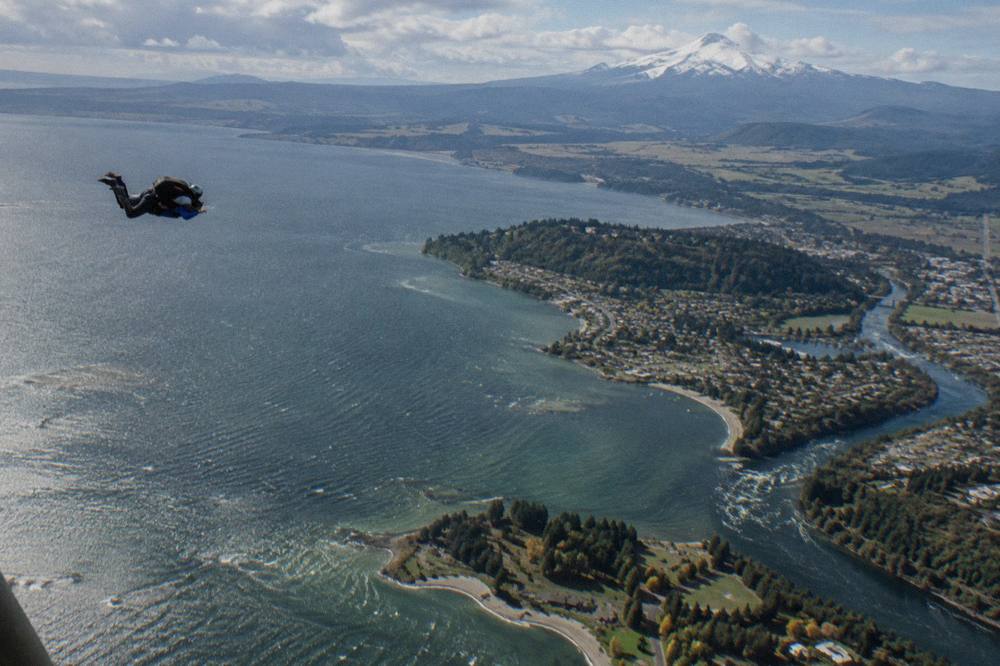
Since the higher options buy more seconds of the same steady, cushioned flight rather than a stronger start, the question is how long you want the floating phase to last. A first-timer gives up little by starting at 12,000 ft, because the featured tour already contains the full arc from rush to float to canopy. The 16,500 ft option carries the extra requirements noted in the table, so it suits jumpers who already know they want the longest steady phase available.
The canopy ride supplies the contrast that makes the freefall legible. The wind noise that defined the middle phase falls away, the pace eases, and there is time to absorb a view that passed too quickly to study during the fall.
Does The Exit Height Change The Stomach Sensation?
Not in any way jumpers commonly report. The building-speed phase at the start of freefall is brief and similar from every altitude, and the rest of the fall is steady at any height. Higher exits simply extend the steady phase. Choosing 15,000 ft over 12,000 ft buys roughly twenty more seconds of the same sensation, not a stronger one.
This matters because a lot of budgeting logic assumes altitude equals intensity. The figures do not support that framing. The stated freefall at 12,000 ft is almost 40 seconds; at 15,000 ft it is almost 60 seconds, up to 60. The difference is duration, and duration is bought for reasons that have little to do with the stomach: more time to look around, more time to settle into the sensation, more footage if a camera package is attached. The physics of the fall itself is identical at both heights, because terminal behaviour depends on body position and the air, not on how high you started.
“I had an amazing skydiving experience with you today, June 19, 2025! The 12,000-ft jump, professional guides, and seamless hotel pick-up and drop-off were outstanding. Thank you for an unforgettable adventure!”
There is one genuine difference worth knowing about, and it belongs to the highest option only. At 16,500 ft the operator restricts the jump to ages 14 and over, requires a high-altitude waiver signed at the drop zone, and says the exit height may be adjusted slightly on the day. An outside freefall camera is not offered at 9,000 or 16,500 ft, though a handycam package is. None of that changes the stomach question; it changes the paperwork and the camera options.
If the longer freefall appeals, the higher-altitude option is worth a look.
One related idea floats around online: that exiting from a helicopter feels different from exiting a plane, because the forward speed is lower. The operator states no such claim and neither does the helicopter company, so it is not printed here as fact. What is stated: the Taupo combination includes a 12-minute helicopter flight followed by the 15,000 ft jump, with a free exit photo per the operator, and the booking page says photos and videos are included.
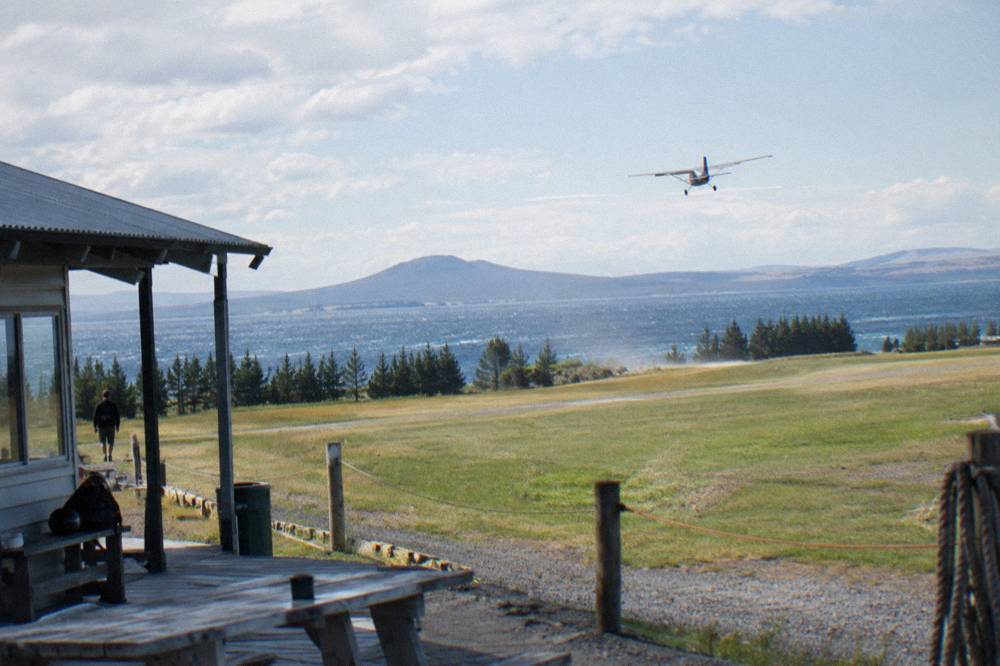
What If You Do Feel A Lurch Anyway?
Some jumpers do report a brief lurch at the exit or under the opening canopy, and neither report contradicts the physics. The exit changes sensation quickly enough to register, and canopy deployment slows the fall decisively. Both moments pass in seconds, and tandem instructors brief them before the door opens.
The honest position is that sensations are reported, not guaranteed, and reports vary. The two moments jumpers mention as the closest things to a drop are the exit itself, where the body transitions from the aircraft to the air in a second or two, and canopy opening, where the descent slows abruptly. Both are brief. Neither resembles the sustained swoop of a coaster hill, and both are over before most jumpers have finished reacting to them.
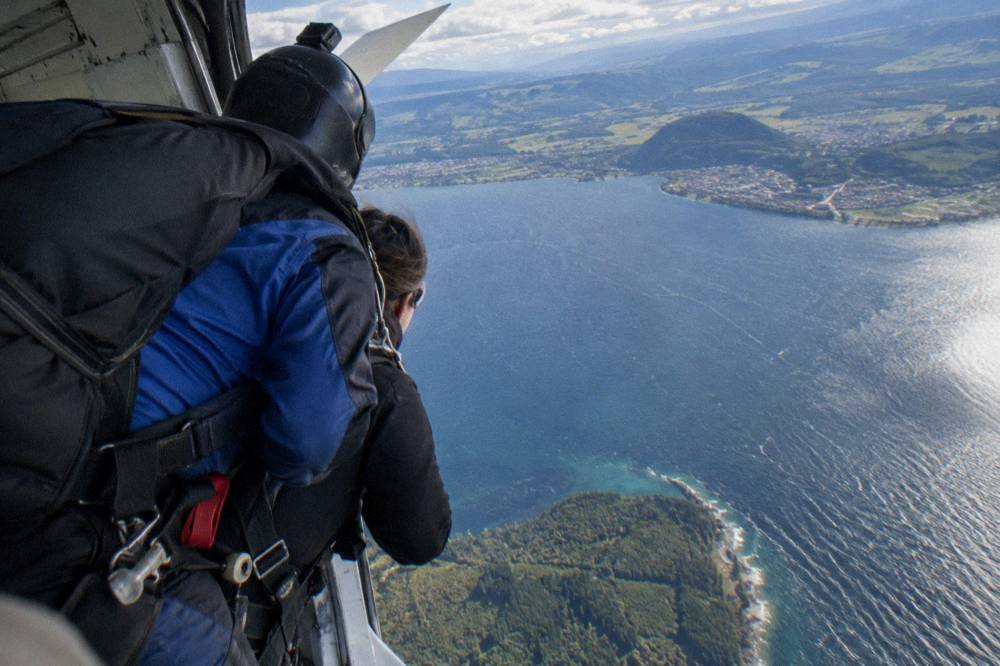
A few practical points blunt even these moments. The tandem pair exits attached to the instructor, in a stable position, so there is no tumbling and no waiting to stabilise. The operator supplies a jumpsuit, goggles, hat and neck buff, and says glasses fit under the goggles. And the exit is loud, busy and fast, which for many people crowds out any refined inner-ear analysis on the way out the door.
If you are the kind of reader who wants the whole day mapped before committing, the what to expect walkthrough covers check-in, the ride to altitude and the canopy descent in order. For the nerves themselves, first-timer experience reports tend to circle back to the same point this article opened with: the anticipated drop is usually the villain, and it usually fails to appear.
What Trips People Up About The Stomach Drop Question
Most mistakes here come from importing roller-coaster expectations into freefall physics. People assume the highest jump delivers the biggest drop, that a helicopter exit is gentler, or that bracing at the door prevents a sensation that the physics largely prevents anyway. Each of these is either unsupported or contradicted by how acceleration actually works.
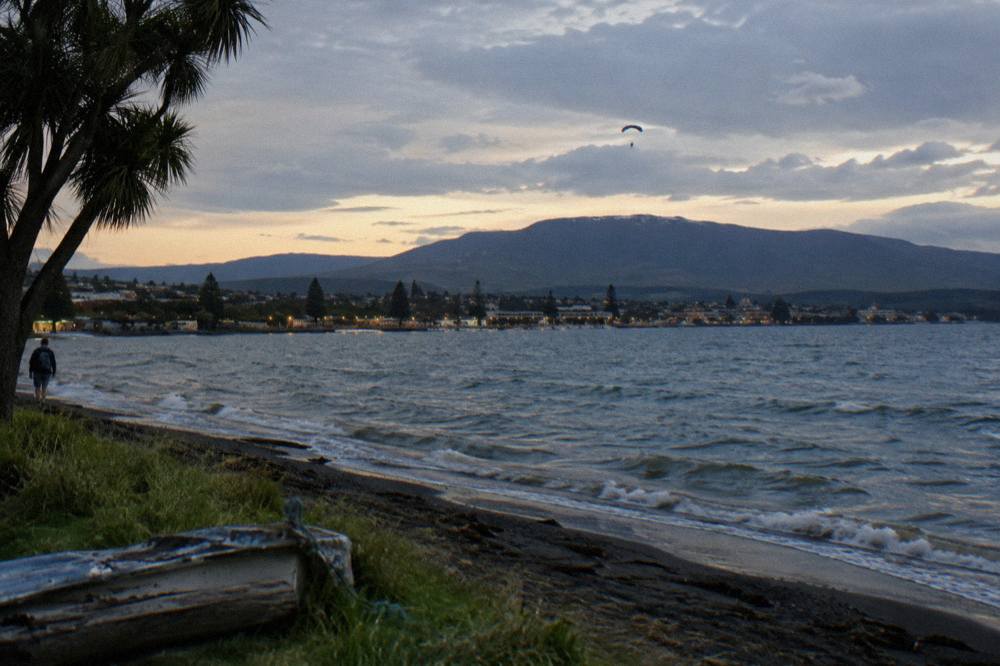
Three traps come up repeatedly:
- Chasing altitude for intensity. Higher exits add seconds of the same steady phase, roughly 40 versus up to 60 on the two bookable Taupo tours, not a stronger sensation. Paying for height is paying for duration.
- Treating the exit as the drop. The exit is the fastest change of the whole jump, but it is a transition into stable flight, not a plunge from rest. It is over in about the time it takes to notice it started.
- Expecting a guaranteed feeling. No operator can promise a sensation, and this one does not try. Reports are consistent that the drop is absent, but your jump is your jump; the honest framing is "commonly reported", never "you will feel".
A fourth, quieter trap is letting the question delay the booking itself. The stomach-drop fear is the single most cited reason people hesitate, and it is aimed at a sensation that freefall, by its physics, mostly does not produce. The first time skydiving guide works through the full nerves-to-door sequence.
For the featured entry jump, the practical facts are solid: the 12,000ft Tandem Skydive runs about 2 hours, is rated 5.0 across 457 reviews, and starts from US$194, with free cancellation up to 24 hours before. If this article has settled the stomach question and the question left is which Taupo jump to book, the details are below.
The Helicopter Route Into The Same Sky
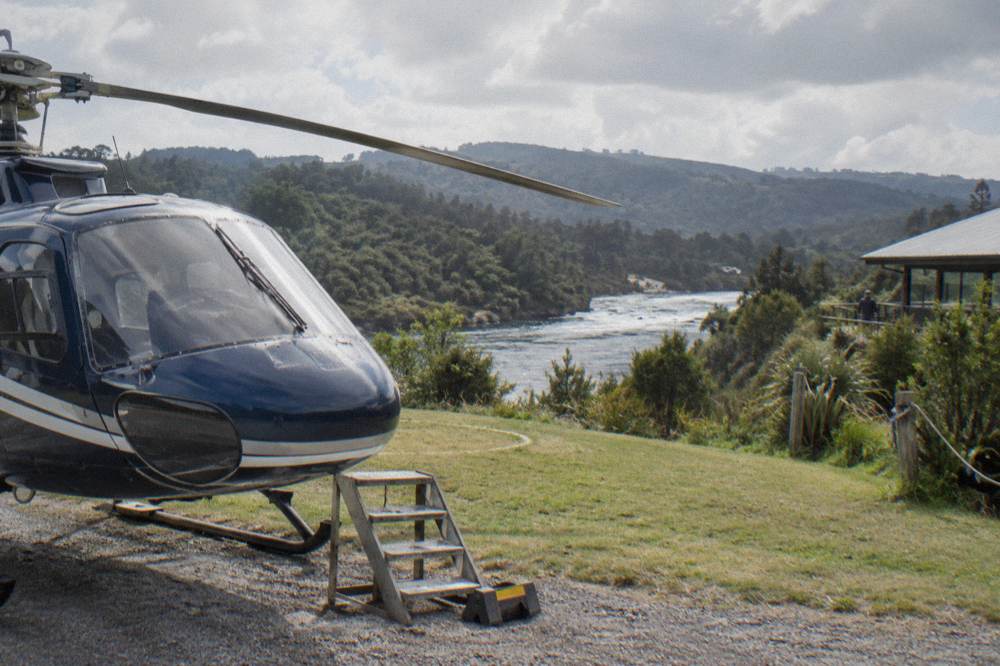
For readers who want the scenic build-up as well as the jump, the combination tour pairs a 12-minute helicopter flight with the 15,000 ft skydive. The operator's price starts from NZ$599 per person with a minimum of two passengers, and the booking page lists a 136 kg (300 lb) suitability limit for this tour only.
The combination answers a different itch than the stomach question. The helicopter leg is a scenic flight in its own right, and the skydive that follows is the same 15,000 ft jump with up to 60 seconds of freefall. The free exit photo comes from the operator, and the booking page adds that photos and videos are included. The schedule the operator gives is a 1pm helicopter and a 2pm skydive, and the booking page names 415 Huka Falls Road, Wairakei as the start point, which is worth knowing because the skydive-only tours run from the drop zone at Taupo Airport instead.
Whether the exit from a helicopter versus a plane changes the first two seconds is, again, not something either company states, and no claim is made here. What can be said is that the freefall phase, the one that dominates the jump and the one this article is really about, is governed by the same physics from any aircraft. The commonly reported absence of the stomach drop holds either way.
| Taupo option | Freefall (operator-stated) | Stated figures |
|---|---|---|
| 12,000ft Tandem Skydive | almost 40 seconds | 5.0 from 457 reviews, about 2 hours, from US$194, free cancellation 24 hours |
| 15,000ft Tandem Skydive | almost 60 seconds, up to 60 | rating, price and duration not stated; ask the operator on 0800 826 336 |
| Helicopter Flight, 15,000ft Skydive | the 15,000 ft freefall, up to 60 seconds | new tour, no rating yet; operator price from NZ$599 per person, minimum 2 |
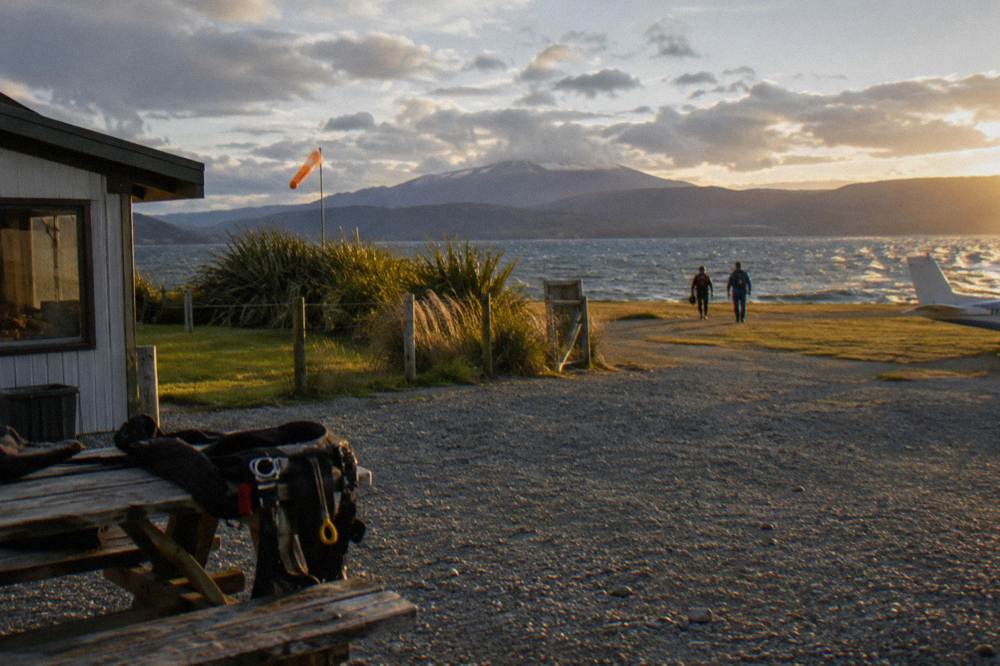
One operator runs the skydive side of all three options, and the same operator's team jumps from the drop zone at 1227 Anzac Memorial Drive, about a 10 minute drive from town, with free transport within Taupo about 30 minutes before your booked time. The details of getting there, parking and the pickup are gathered in the meeting point guide.
Whichever of the three you lean toward, the same three cards sit below for a direct comparison.
Common Questions About The Stomach Drop
Why Does Your Stomach Not Drop During Skydiving?
Because the stomach drop comes from rapid changes in speed, and a skydive builds fall speed gradually from the aircraft's forward speed rather than from a standstill. The inner ear registers steady, sustained motion and largely filters it out, while the air resistance builds a supporting cushion. Jumpers commonly report floating rather than falling.
Do You Feel The Drop When You Jump Out Of The Plane?
The exit is the fastest change of sensation in the whole jump, and some jumpers report a brief rush there. It is a transition into stable flight, not a plunge from rest, and it passes in a second or two. The sustained coaster-style swoop is what most jumpers say never arrives.
Does A Higher Altitude Make The Drop Feeling Stronger?
No stated fact supports that. Higher exits extend the steady freefall phase: the operator states almost 40 seconds at 12,000 ft, up to 60 at 15,000 ft and over 70 at 16,500 ft. The physics of the fall is the same at each height, so altitude buys duration, not intensity.
Why Does A Roller Coaster Stomach Drop Happen But Not A Skydive One?
A coaster takes your body from slow to fast within a second or two, which the inner ear reads as a jolt. A skydive spreads the speed build-up over several seconds of one-directional fall, then holds a steady speed on the air cushion. Steady input, no jolt.
Can The Operator Promise How The Freefall Will Feel?
No, and it does not. Sensations are reported, not guaranteed, and weather decides whether a jump runs. What is stated is the freefall length at each altitude and the equipment supplied; everything about feeling is framed as commonly reported, never as a promise.
Is The Stomach Drop Feeling The Same From A Helicopter Exit?
Neither the operator nor the helicopter company states anything about the sensation of a helicopter exit, so no claim is made here. The freefall phase that follows is governed by the same physics as any other exit. The Taupo combination pairs a 12-minute helicopter flight with the 15,000 ft jump.