Is It Normal To Cry After Skydiving?
Tears after a tandem skydive are a commonly reported part of the adrenaline comedown. A calm, honest look at why it happens, what the aftermath can feel like, and what the Taupo jump day involves.
Yes, tears after a tandem skydive are a commonly reported reaction, and they are not a sign that anything went wrong. A skydive packs an enormous adrenaline surge, a long anticipation curve and a sudden release into a single half hour, and when the intensity drops away the emotional system can let go in ways the conscious mind did not plan. Some people cry on landing, some cry later in the car, and some feel nothing but hunger. All of it falls inside the range of what jumpers describe afterwards.
This article walks through what is commonly reported about the post-jump emotional dip, what the operator's own jump day actually looks like in Taupo, and what you take home with you, including the photo and video options. It keeps to hedged, general language: no statistics, no medical advice, and where something is not stated by the operator, it says so plainly. If distress after a jump feels heavy or lasts longer than a day or two, the right move is a conversation with a doctor, not a search engine.
The three Taupo options covered here are the 12,000ft Tandem Skydive, the 15,000ft Tandem Skydive, and the Helicopter Flight, 15,000ft Skydive combo. They are all tandem jumps run from the same drop zone at Taupo Airport, which means the emotional arc this article describes applies to any of them.
Yes, it is completely normal to cry after skydiving, and it happens often enough that experienced drop zones treat post-jump tears as unremarkable rather than a sign that anything is wrong. If you find yourself crying after landing, you are not alone, and staff at busy drop zones see this reaction regularly enough that it draws no special attention. Reports from first-time tandem jumpers again and again include tears, shaky legs, giddy laughter, sudden tiredness, or a strange flatness an hour afterwards, sometimes several of these in sequence. None of these reactions means the jump went badly. They are the after-effect of a body that spent minutes flooded with adrenaline and then, quite quickly, stopped needing it. The release has to go somewhere, and for plenty of people it goes out through the eyes.
Why the timing often lands after landing is worth understanding. During the jump itself, from the aircraft door to the moment the canopy levels out, there is very little room for reflection: the mind is fully occupied with sensation and instruction. The emotional processing tends to start once the feet are back on the ground and the tandem master is unclipping harnesses. That is when many jumpers describe the wave arriving, sometimes on the walk back to the hangar, sometimes only when they sit down.
The reaction is not tied to fear levels either. People who were terrified on the way up sometimes land dry-eyed and euphoric, while people who felt calm in the plane find themselves crying over a certificate ten minutes later. The intensity of the event, not the intensity of the fear, is what the body is responding to, and the two do not track each other in any tidy way.
A point worth repeating: this article describes commonly reported experiences in general terms and makes no medical claims. If crying after a jump turns into distress that does not ease, or sits on top of an existing mental health concern, speaking with a doctor is the sensible next step, not pushing through it alone.
Why Adrenaline Release Can Turn Into Tears
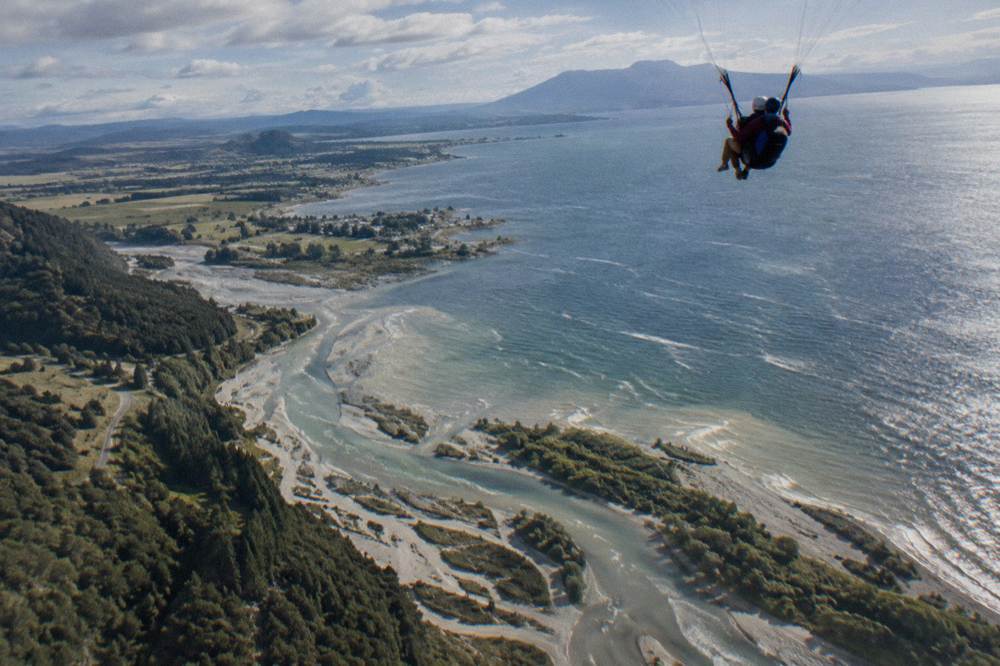
The tears that arrive once the rush subsides are usually the tail end of the adrenaline cycle rather than a response to sadness, and that distinction matters for how you read your own reaction. Crying at this stage is the body completing its release, not evidence that the experience itself upset you. Adrenaline prepares the body for intense action, and a tandem freefall is about as intense as voluntary action gets. When the jump ends, the hormone does not vanish instantly; it tapers off, and the comedown period is where jumpers commonly report wobbly emotions, unexpected tears, or a floaty, disconnected feeling. In general terms, this is a well-known pattern after big adrenaline events of many kinds, and it passes on its own for most people.
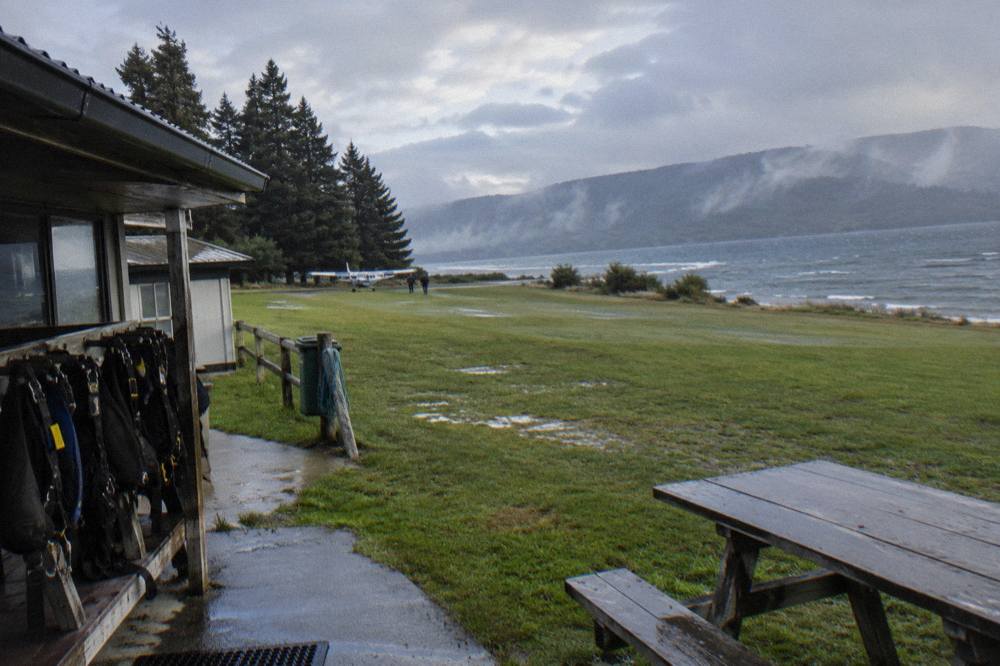
Consider what the half hour around the jump contains. You sign in, get kitted out, ride to altitude, fall, fly a canopy, land, and hand back the harness, all inside a skydive portion the operator describes as about 30 minutes, with the whole visit typically finished in about 2 hours. The operator's FAQ suggests allowing 2 to 3 hours, and its terms say 3 hours. That compression is part of why the aftermath hits the way it does: the body goes from maximum arousal back to ordinary airport-car-park reality very quickly, and emotions can lag behind.
It also helps to know that tears can arrive without any negative feeling attached. Jumpers often describe crying while simultaneously feeling fantastic, which sounds contradictory until you separate the physical release from the emotional meaning. Crying here is not grief; it is overflow. The distinction is worth holding onto, because people sometimes worry afterwards that their tears meant they secretly hated the jump, when the rest of their memory of the day says otherwise.
For anyone who knows they respond strongly to adrenaline, a little planning softens the comedown. Booking a low-stakes window afterwards, having a friend along, and not scheduling a drive or a big commitment straight after the jump are all reasonable, personal-preference moves. The operator's own FAQ page covers the practical side of the day, including arrival and check-in timing, and is worth a read before you go.
What The Rest Of The Day Can Feel Like
The rest of the day commonly brings the emotional aftermath in waves rather than in one clean, finished moment. You can feel mostly steady for a stretch and then sense it rising again hours later. Knowing that shape in advance does not stop the waves, but it can make them easier to sit with as they pass through. Commonly reported phases include an initial buzz on landing, a dip or flat stretch within the next couple of hours, sudden hunger or tiredness, and then a second wave of energy or reflection by evening. Some people sleep deeply that night; others feel wired. There is no single correct pattern, and no reaction described here is a promise of what your day will hold.
The first hour is usually the most visibly emotional. This is when the certificate is handed over, when photos and video are discussed, and when the drop zone is full of other people in the same state, which normalises it fast. The operator includes a certificate of completion with every jump, and that small ceremony, standing around with a piece of paper that says you did it, is a moment where tears show up often. It is a marker of something genuinely large, and the body knows it.
Later in the day, the commonly described pattern is more low-key: a sense of mild unreality when retelling the story, occasional random replays of the door opening, and a deep tiredness once the adrenaline fully clears. None of this needs management. Food, water, an early night and a ordinary pacing of the afternoon are the whole toolkit. If the flatness or the tears persist for days rather than hours, or sit alongside low mood more generally, that is a conversation for a doctor rather than a symptom of the skydive.
It is also fine to feel nothing dramatic at all. Reports from jumpers include plenty of people whose strongest after-reaction was wanting lunch. The absence of tears is just as normal as their presence, and neither reaction says anything about courage or about whether the jump was worth it. For a fuller walkthrough of the day itself, the what to expect on a Taupo skydive guide covers the sequence from sign-in to landing in detail.

The Taupo Jump Day Around That Moment
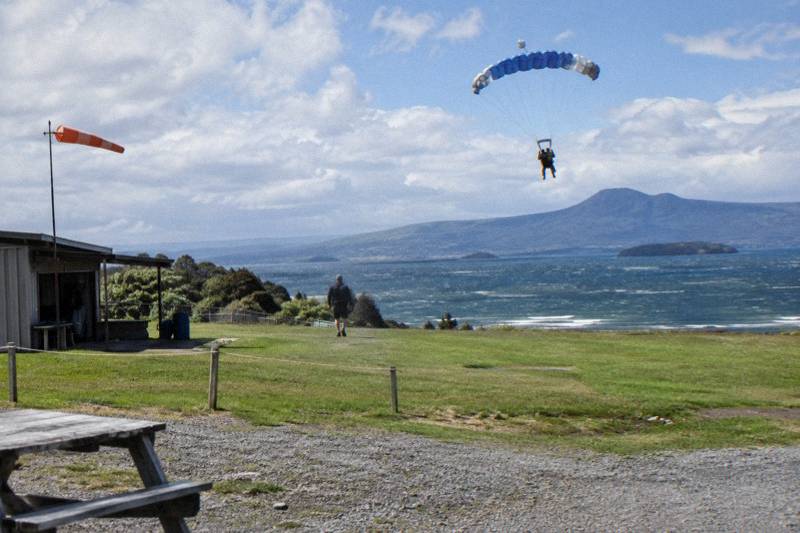
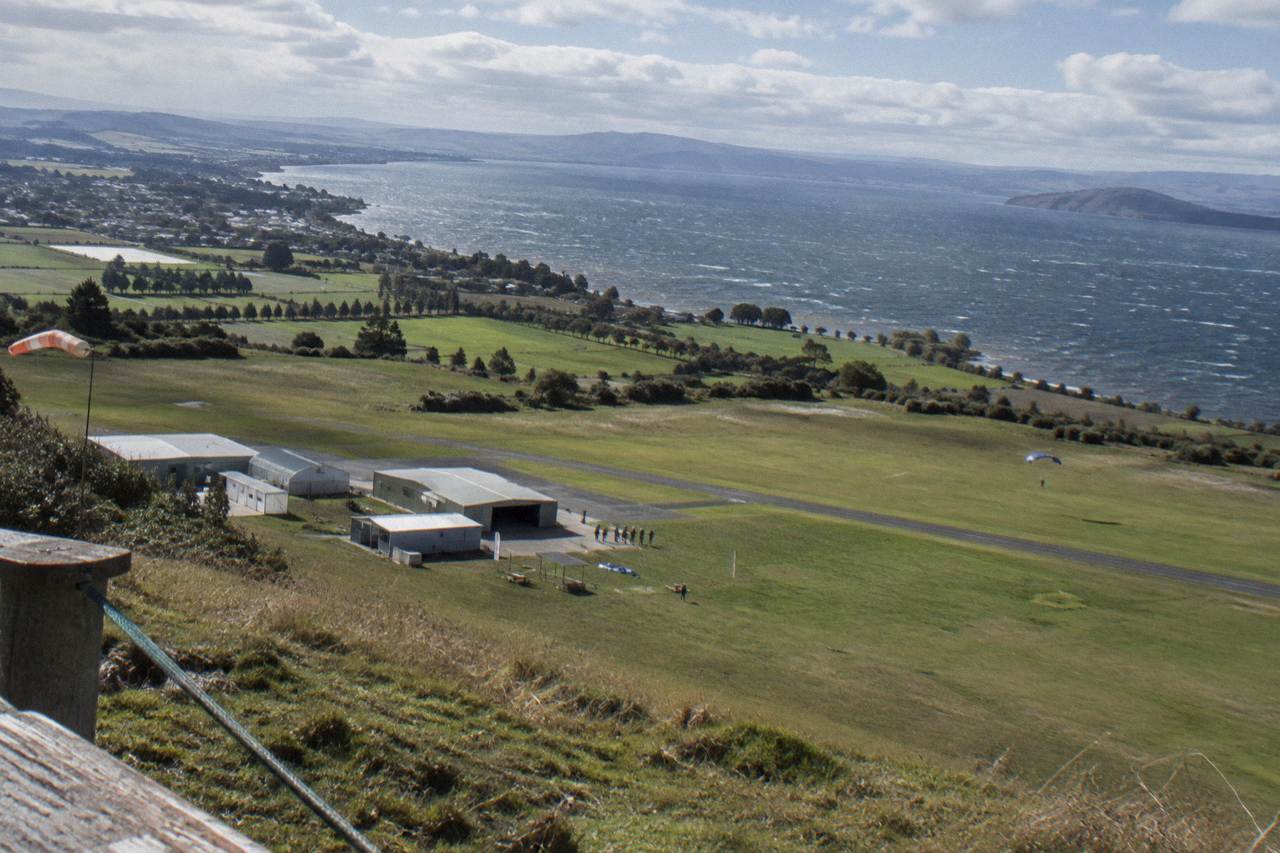
The jump itself is the emotional peak of the day, but it sits inside a tightly organised schedule that wraps around it. Knowing that structure in advance genuinely helps, because most of the logistics are quietly handled for you while your head is busy elsewhere, caught somewhere between excitement and nerves. The drop zone is at 1227 Anzac Memorial Drive, Taupo Airport, which the operator describes as about a 10 minute drive from town. Free transport within Taupo is offered, by stretch Hummer or minibus, picking up about 30 minutes before the booked time, and you are asked to arrive 30 minutes before your slot to sign in. The skydive portion runs about 30 minutes, and the operator says you are finished in about 2 hours overall, with 2 to 3 hours suggested in its FAQ and 3 hours in its terms.
Trips run hourly, from 9:00 to 16:00 in winter and 8:00 to 18:00 in summer, and the operator says it runs 362 days a year. Weather decides whether a jump goes ahead, so nothing about the day is guaranteed: the operator asks you to call 30 minutes before arrival or pickup to confirm conditions. If weather holds the jump, you rebook the same day or a later day, or cancel free if you cannot come back. Payment is taken after the jump, which removes one layer of pre-jump tension you might otherwise carry.
| Stage of the visit | Operator-stated timing | Notes |
|---|---|---|
| Pickup (if used) | About 30 minutes before booking | Free within Taupo, stretch Hummer or minibus |
| Sign-in | Arrive 30 minutes before booking time | Government photo ID required |
| Skydive portion | About 30 minutes | Includes kitting out, the flight and the jump |
| Whole visit | Finished in about 2 hours | FAQ says allow 2 to 3 hours; terms say 3 hours |
| Weather check | Call 30 minutes before arrival or pickup | Operator confirms conditions |
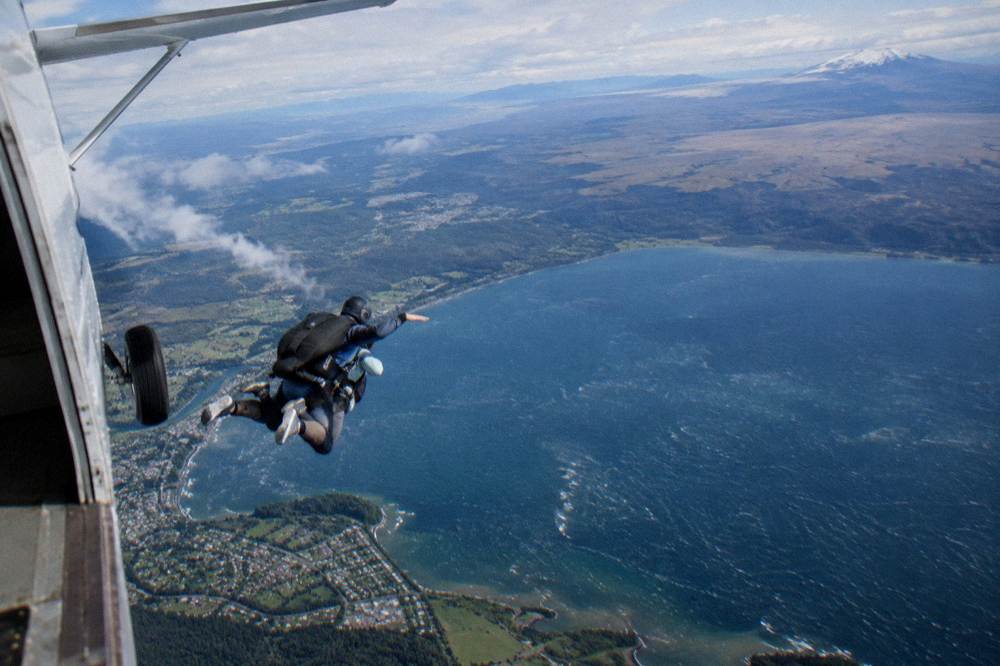
The 12,000ft Tandem Skydive, the featured option on this site, is the one with printed figures: rated 5.0 across 457 reviews, from US$194, a 2 hour duration on its booking page, and free cancellation up to 24 hours before. The 15,000ft Tandem Skydive, the higher-altitude sibling, carries no printed rating, price or duration; ask the operator directly on 0800 826 336 for its current figures. Freefall is where the intensity comes from, and the operator states almost 40 seconds at 12,000 ft and almost 60 seconds at 15,000 ft.
The combo option adds a different emotional shape again. The Helicopter Flight, 15,000ft Skydive pairs a 12-minute helicopter flight with the 15,000 ft jump, runs from NZ$599 per person with a minimum of two passengers, and the booking page says photos and videos are included. There is no stated total duration, and its start point is the Huka Falls Road area rather than the airport. If the idea of extending the intensity across two aerial experiences appeals, the Taupo heli and skydive combo guide breaks the day down stage by stage.
Photos, Video And The Certificate You Take Home
What you take home from the jump comes down to three things: the photos, the video, and the certificate. Together they tend to become the emotional anchor of the whole memory, which is why the camera decision deserves a moment of calm thought before the day rather than during it. The operator offers two camera systems: a Selfie cam, operated from tandem master wrist cameras, and a Freefall cam, where a separate camera flyer jumps alongside you. The named packages stack up as follows: Ace covers selfie HD photos, Pro adds selfie HD video, Guru covers freefall HD video and photos, and Legend combines freefall plus selfie video and photos plus an exit photo. Camera options run from NZD 25 up to NZD 300, with 10% off a camera package booked online, and media is emailed to you as a link.
| Package | Camera source | What it covers |
|---|---|---|
| Ace | Selfie cam, tandem master wrist cameras | HD photos |
| Pro | Selfie cam | HD video and photos |
| Guru | Freefall cam, separate camera flyer | HD video and photos |
| Legend | Freefall plus selfie | Video and photos from both, plus exit photo |
The emotional logic here is real. Many jumpers report that the freefall itself is too overwhelming to remember clearly, and that the video becomes the version of the event they actually keep. Watching your own face in the door later, tears and all, is commonly described as one of the best parts of the whole experience. An outside freefall camera is not offered at 9,000 or 16,500 ft, where a handycam package is the alternative; at the 12,000 and 15,000 ft altitudes covered by the bookable tours, the full range applies. Details are on the operator's photo and video page.
The certificate and the free neck buff, both included with every jump, play a smaller but real part in the aftermath. They are physical proof at a moment when the whole experience can feel like it happened to someone else. If the jump is part of a bigger occasion, an anniversary, a milestone birthday, a first visit to New Zealand, the certificate and the emailed photo link are usually what gets shared first. For ideas on that front, the Taupo skydive for couples and celebrations guide collects the practical angles.
What Trips People Up About Post-Jump Emotions
Most people stumble by reading tears as a verdict on the jump itself, measuring their own reaction against everyone else's, or treating the emotional flatness that follows as proof that something is wrong with them. None of these readings hold up. All three are common, and all three usually dissolve with a bit of context. The tears are not a review of the jump; they are a by-product of the adrenaline cycle, and they show up in jumpers who loved every second. The comparison trap is just as empty, because reactions vary wildly between people on the same plane. And the flatness, where it appears, typically eases across the rest of the day.
A few practical stumbles are worth flagging too:
- Booking a demanding commitment straight after the jump, then being surprised the brain is foggy for a couple of hours. The operator itself suggests allowing 2 to 3 hours for the whole visit.
- Skipping food and water all morning out of nerves, which makes any comedown feel worse than it needs to.
- Assuming the emotional dip means you should not have jumped, when plenty of repeat jumpers describe the same dip and go back anyway.
- Waiting until the day itself to decide about photos and video, when a calm decision beforehand, with the 10% online discount, is easier to make.
- Worrying that crying in front of the drop zone staff is embarrassing; it is routine at any tandem operation.
One more thing worth saying plainly. If the emotional aftermath of a jump, or the anticipation leading up to it, connects to something bigger, an anxiety condition, a period of low mood, a recent loss, this is worth weighing honestly before booking rather than pushing through on the day. The operator asks that anyone with a health question see a doctor first, and the same spirit applies to mental health. The 24-hour free cancellation on the 12,000ft Tandem Skydive exists for exactly this kind of second thought, and it is better used than ignored.
The honest summary is that a tandem skydive is a big event, and big events leave marks, some of them wet. Anyone choosing to jump with Taupo Tandem Skydive is signing up for the whole arc: the nerves, the door, the fall, the landing, and the hour afterwards where the body quietly puts itself back together. Crying is one of the more common ways that last part shows up, and it is a completely ordinary one.
Common Questions About Crying After Skydiving
Is It Normal To Cry After Skydiving?
Yes. Tears after a tandem jump are a commonly reported reaction to the adrenaline surge and its comedown, not a sign that anything went wrong. Some people cry on landing, some later in the day, and some not at all; all of these fall within the range of what jumpers describe.
How Long Do The Emotions After A Skydive Last?
Commonly reported experiences describe waves across the rest of the day: a buzz on landing, a dip or flat stretch within a couple of hours, tiredness, and sometimes a second wave of energy by evening. If distress or low mood persists for days rather than hours, speak with a doctor.
Does Crying After A Jump Mean I Did Not Enjoy It?
No. Jumpers often report crying while simultaneously feeling fantastic. The tears are generally the physical release after an intense adrenaline event, not a verdict on the experience, and they show up in people who loved every second of the jump.
Can I Do Anything To Soften The Emotional Comedown?
Personal-preference moves that jumpers commonly mention include eating and drinking normally beforehand, having a friend along, and leaving the hours after the jump unscheduled. The operator itself suggests allowing 2 to 3 hours for the whole visit, so a low-key afternoon fits the day naturally.
Do The Photos And Video Arrive Before The Emotions Settle?
Media is emailed as a link after the jump, and the certificate of completion is handed over on the day. Many jumpers describe watching the video later as one of the best parts of the experience, partly because the freefall itself is hard to remember clearly.
Should I Be Worried If I Feel Flat Later In The Day?
A flat or tired patch later in the day is a commonly reported part of the adrenaline comedown and usually eases on its own. It is not stated as a medical concern by any official source, and this article makes no medical claims. If it persists or sits alongside wider distress, raise it with a doctor.